
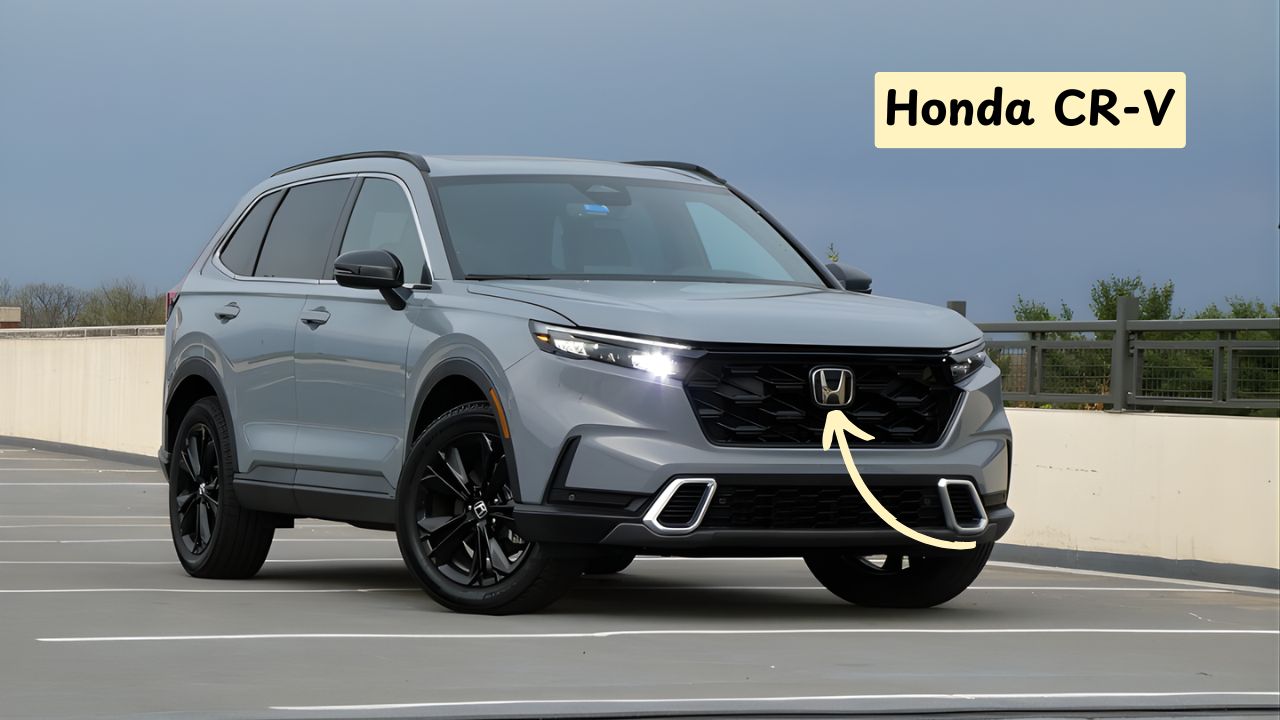
Honda is gearing up to make a strong comeback in India’s premium SUV market with the seventh-generation CR-V. After skipping the current sixth-gen model, Honda is preparing to launch the next iteration globally, and this time, it’s coming to India.
With an all-new platform, advanced hybrid technology, and a bold design approach, the upcoming CR-V could mark a turning point for the Japanese automaker in India.
Platform
The next-gen Honda CR-V will be built on an entirely new mid-size platform developed in Japan. Honda recently showcased this new platform at a technology workshop, hinting at major advancements in design and engineering. The new structure is significantly lighter than the one underpinning the current model, expected to shave off around 90 kg in weight.
This lightweight construction will translate to improved performance, better handling, and enhanced fuel efficiency. The new platform also shares more than 60% of its parts with upcoming models like the Honda Civic and Accord, ensuring cost efficiency and easier maintenance.
| Key Platform Highlights | Details |
|---|---|
| Weight Reduction | Up to 90 kg lighter |
| Shared Components | 60% with Civic & Accord |
| Drivetrain | Electric AWD option |
| Global Debut | Expected in 2027 |
Powertrain
Powering the next-gen CR-V will be an all-new hybrid system. It combines a 2.0-liter direct-injection petrol engine with a new-generation electric setup.
Honda has gone a step further by developing a rare-earth-free traction motor — a move that makes the system more sustainable and cost-effective. A new generator motor and a high-voltage battery pack complete the setup, promising stronger performance and improved fuel economy.
What’s particularly exciting is the switch to an electric all-wheel-drive (AWD) system. Unlike the current mechanical AWD setup, this new system will use a second electric motor to power the rear wheels.
This design not only improves traction and handling but also allows Honda to reduce the size of the center tunnel inside the cabin — creating a more spacious and comfortable interior for rear passengers.
Interior
Inside, Honda is going all-in on technology and comfort. The next-gen CR-V will feature a massive 15-inch touchscreen infotainment system, a big jump from the 9-inch unit found in the current global model. The larger display will offer a smoother user experience, supporting advanced connectivity, multimedia, and navigation functions.
Another key change will be the steering column-mounted gear shifter, which replaces the traditional console-mounted setup. This clever design frees up valuable space in the center console, making the cabin feel roomier and more ergonomic.
Expect soft-touch materials, refined textures, and improved seating comfort — all aimed at creating a truly premium cabin environment.
Features
The upcoming CR-V will be loaded with modern technology and safety features. It is likely to come with Honda Sensing 360, the brand’s latest suite of driver assistance systems. This includes adaptive cruise control, lane-keeping assist, and collision mitigation braking, enhancing both safety and convenience.
Other features expected include wireless smartphone connectivity, over-the-air (OTA) updates, and a fully digital instrument cluster. These additions will make the CR-V more competitive against European and Korean rivals, offering both comfort and cutting-edge tech.
Launch
The global debut of the next-gen Honda CR-V is expected in 2027, with the Indian launch likely to happen around the same time. When it arrives, it will compete against models like the Volkswagen Tayron and Skoda Kodiaq. However, Honda is unlikely to offer a three-row version in India, focusing instead on a two-row layout for improved comfort and practicality.
The biggest challenge for Honda will be pricing. The previous CR-V and Civic faced poor market response mainly because of high prices.
This time, Honda is expected to localize more components or assemble the SUV as a CKD (Completely Knocked Down) unit in India to make it more affordable. If the pricing is competitive, the CR-V could be a serious contender in the premium SUV space.
Legacy
The Honda CR-V has a strong history in India. First introduced in 2003, the SUV was sold across five generations until 2020. Production was halted after Honda shut down its Greater Noida plant, where the CR-V was assembled.
The remaining Tapukara facility wasn’t feasible for production at the time. Now, with Honda re-strategizing its India operations, there’s renewed optimism that the brand will reintroduce the CR-V with localized assembly.
With a lightweight body, a powerful hybrid system, an electric AWD setup, and a high-tech interior, the next-gen Honda CR-V could be one of the most advanced SUVs in its segment. If Honda gets the balance right between performance, technology, and pricing, this could mark a strong comeback for the Japanese brand in India’s fast-evolving SUV market.
FAQs
When will the new Honda CR-V launch in India?
The next-gen CR-V is expected to arrive in India by 2027.
What engine will power the next-gen CR-V?
It will feature a 2.0-liter direct-injection petrol hybrid engine.
Will the new CR-V have all-wheel drive?
Yes, it will feature an electric AWD system with dual motors.
What is the expected weight reduction in the new CR-V?
The next-gen model will be up to 90 kg lighter than the current one.

Will Honda offer a 3-row version in India?
No, the India-bound CR-V is expected to be a two-row SUV.