
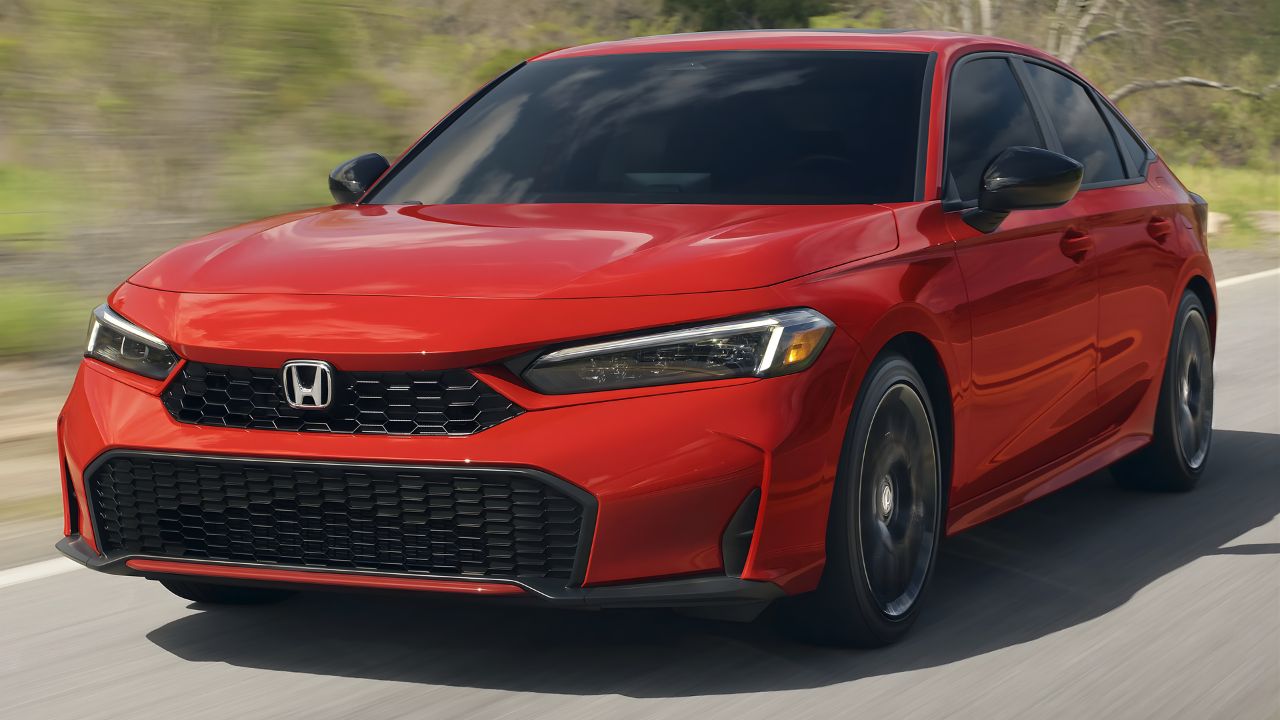
The Honda City has remained a consistent performer in the midsize sedan segment, known for its balance of comfort, efficiency, and reliability. The upcoming 2027 Honda City facelift is expected to build on this foundation with measured updates to design and features while retaining its existing mechanical setup.
Recently spotted testing in Brazil under heavy camouflage, the facelift indicates changes that could extend to multiple markets, including India.
This update comes at a time when competition in the sedan segment has intensified, with models like the Hyundai Verna, Skoda Slavia, and Volkswagen Virtus offering modern styling and feature-rich cabins.
Honda’s approach with the facelift appears to focus on maintaining relevance until the next-generation City is introduced, which is expected around 2028.
Design
The exterior design of the 2027 Honda City facelift is expected to receive subtle yet noticeable revisions. The test mule suggests a redesigned front grille that appears wider and more structured, giving the car a sharper visual identity.
The front bumper is also likely to be updated, with styling cues that may draw inspiration from the Honda Civic. These changes are expected to enhance the sedan’s road presence without altering its overall character.
The headlights could see minor revisions, possibly incorporating updated LED elements for improved illumination and aesthetics.
From the side, the overall profile is expected to remain largely unchanged. However, new alloy wheel designs may be introduced to provide a refreshed look. At the rear, updates are likely to be limited to minor bumper revisions and subtle detailing changes.
Honda appears to be maintaining the City’s familiar proportions while refining specific elements to keep the design contemporary.
Interior
Inside the cabin, the updates are expected to be evolutionary rather than transformative. The layout is likely to remain unchanged, retaining the clean and functional design that has been a key strength of the City.
One of the expected changes is updated seat upholstery, which could enhance the overall cabin appeal. Material quality and finishes may also see minor improvements, contributing to a more premium feel.
The focus inside the cabin appears to be on improving comfort and maintaining usability, rather than introducing significant structural changes.
Features
The feature list of the 2027 Honda City facelift is expected to receive meaningful additions. While the current model already offers a range of convenience and connectivity features, the facelift aims to address gaps compared to newer rivals.
Existing features likely to be retained include:
- 8-inch touchscreen infotainment system
- Wireless Android Auto and Apple CarPlay
- Ambient lighting
- PM 2.5 air filtration system
- Automatic climate control
- 8-speaker audio system
In addition, the following features are expected to be introduced:
- 360-degree camera
- Ventilated front seats
These additions are expected to improve convenience and align the City more closely with segment expectations.
Engine
The 2027 Honda City facelift is not expected to introduce any major mechanical changes. The Indian version will likely continue with the 1.5-litre i-VTEC petrol engine, which has been a core part of the model’s appeal.
This engine is known for its smooth power delivery and reliability, making it suitable for both urban and highway use. It produces 121 hp and 145 Nm of torque and is paired with either a 6-speed manual transmission or a CVT automatic.
A comparison between the Indian and Brazilian versions is outlined below:
| Specification | India Version | Brazil Version |
|---|---|---|
| Engine | 1.5L i-VTEC | 1.5L Flex Fuel |
| Power | 121 hp | 126 hp |
| Torque | 145 Nm | 152-155 Nm |
| Transmission | 6MT / CVT | 7-speed CVT |
| Fuel Type | Petrol (E20) | Petrol/Ethanol |
While both versions share a similar base engine design, differences in fuel compatibility and tuning result in variations in output. The Brazilian model supports ethanol blending, which contributes to its higher power and torque figures.
In India, the focus remains on E20 fuel compliance, which aligns with regulatory requirements and future fuel standards.
Competition
The Honda City facelift will continue to compete in a segment that includes several well-established models. Key competitors include:
- Hyundai Verna
- Skoda Slavia
- Volkswagen Virtus
Each of these models offers distinct advantages, such as turbocharged engines, modern styling, or advanced features. The City, on the other hand, has traditionally focused on comfort, interior space, and long-term dependability.
With the facelift, Honda appears to be addressing areas such as feature availability and design refinement to remain competitive within this segment.
Launch
Honda has not yet announced an official launch timeline for the 2027 City facelift in India. However, based on current developments and testing activity, the model is expected to be introduced between late 2026 and early 2027.
This timeline would allow Honda to maintain the relevance of the current generation before transitioning to a new model in the coming years.
The 2027 Honda City facelift represents a measured update aimed at sustaining the model’s position in a competitive segment.
By introducing design refinements and additional features while retaining a proven powertrain, Honda is focusing on continuity and gradual improvement.
For buyers seeking a sedan that emphasizes comfort, efficiency, and reliability, the updated City is expected to remain a practical and balanced option.
FAQs
What is new in the Honda City 2027 facelift?
It gets design updates and added features.
Will the engine change in the facelift?
No, it continues with the same 1.5L engine.
Does it have ventilated seats?
Yes, expected in higher variants.
When will it launch in India?
Expected between late 2026 and 2027.
Who are its main rivals?
Verna, Slavia, and Virtus.