
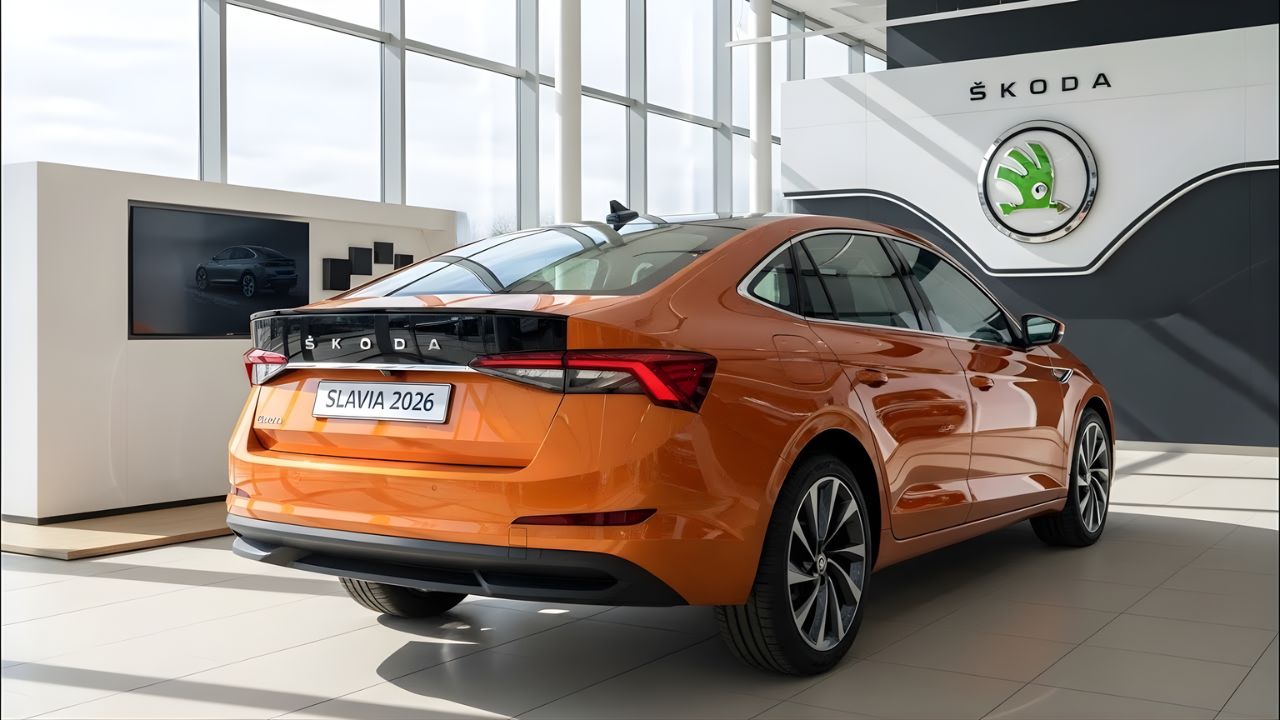
The Skoda Slavia facelift has been spotted testing yet again, and this time the spy shots reveal more than ever. Though still partially camouflaged, the updated midsize sedan clearly hints at subtle design tweaks and meaningful feature upgrades.
Expected to launch by late 2026, the refreshed Slavia will continue its fierce rivalry with the Volkswagen Virtus, Hyundai Verna, and Honda City.
So, is this just a minor refresh, or a smart evolution? Let’s break it down in detail.
Design
From the outside, the Slavia facelift appears more refined than revolutionary. Skoda seems to be sharpening the details rather than changing the overall character. And honestly, that’s a smart move. The current Slavia already looks elegant and sporty—why mess with a good thing?
Up front, the sedan gets a redesigned bumper with a larger air intake and sharper contours. This gives the car a slightly more aggressive stance, almost like it’s leaning forward, ready to sprint. The LED headlamps appear sleeker with updated internal elements, adding a fresh visual signature.
One noticeable change is the tweaked grille, which may feature integrated lighting. This small but premium touch aligns the Slavia with Skoda’s newer SUV lineup.
From the side, the silhouette remains familiar. However, new alloy wheel designs are expected to enhance its road presence. Skoda may also introduce fresh paint shades to keep the lineup exciting.
At the rear, subtle bumper revisions and a connected LED taillamp setup modernize the look. The connected lighting theme mirrors what we’ve seen on Skoda SUVs, bringing a family resemblance to the sedan range.
Here’s a quick overview of exterior updates:
| Feature | Current Model | Facelift Update |
|---|---|---|
| Front Bumper | Standard | Sportier, larger air intake |
| Headlamps | LED units | Revised LED detailing |
| Grille | Chrome finish | Integrated lighting |
| Alloy Wheels | Existing designs | New designs expected |
| Taillamps | Split LED | Connected LED setup |
Cabin
Step inside, and the changes become more noticeable. The dual-tone dashboard and floating infotainment display remain intact, preserving the premium feel. But the highlight is the new 10.25-inch digital instrument cluster, likely borrowed from the Kushaq facelift.


Think of it as upgrading from a basic fitness tracker to a smartwatch—you still get the essentials, but with more customization and clarity. The digital cluster should offer multiple display modes and better graphics.
The 10.1-inch infotainment system is expected to receive software enhancements, including AI-based voice assistance. This could make interactions smoother and more intuitive.
Other anticipated upgrades include:
- Dual-tone ambient lighting
- Rear seat massage function
- Updated infotainment interface
Interestingly, the test mule did not feature a panoramic sunroof. This suggests Skoda will likely continue offering a single-pane sunroof instead of a full-length glass roof.
Safety
Safety has become a key factor in the midsize sedan segment, and Skoda seems prepared to raise the bar. The facelifted Slavia is expected to add front parking sensors and all-wheel disc brakes.
While these updates may sound small, they enhance daily driving convenience and braking performance.
Existing safety features are likely to continue, including:
- Six airbags
- Electronic Stability Control (ESC)
- Hill hold assist
- Rear parking sensors
- Tyre Pressure Monitoring System (TPMS)
Here’s a quick safety comparison:
| Safety Feature | Current | Facelift Expected |
|---|---|---|
| Airbags | 6 | 6 |
| ESC | Yes | Yes |
| Hill Hold | Yes | Yes |
| Front Sensors | No | Yes |
| All-wheel Disc Brakes | No | Yes |
| TPMS | Yes | Yes |
In a market where buyers are increasingly safety-conscious, these additions could make a meaningful difference.
Engine
Under the hood, Skoda is expected to retain the current turbo-petrol engine lineup. The brand seems confident in its performance-oriented strategy.
The 1.0-litre TSI engine may receive a significant upgrade—an 8-speed automatic gearbox replacing the older 6-speed automatic. This change could improve fuel efficiency and provide smoother highway cruising.
Meanwhile, the 1.5-litre TSI engine is likely to continue with the 7-speed dual-clutch transmission (DCT), known for its quick shifts and responsive performance.
Here’s a quick engine summary:
| Engine | Type | Transmission (Expected) |
|---|---|---|
| 1.0L TSI | Turbo Petrol | 6MT / 8AT |
| 1.5L TSI | Turbo Petrol | 6MT / 7DCT |
Power figures are expected to remain unchanged, maintaining the Slavia’s balance between efficiency and driving excitement.
Competition
The midsize sedan segment remains highly competitive. The Hyundai Verna offers futuristic styling and powerful engines. The Honda City focuses on comfort and reliability. The Volkswagen Virtus shares the same platform and engines as the Slavia.
So how does the Slavia facelift stay ahead? By refining what already works. Instead of chasing flashy gimmicks, Skoda is enhancing design details, adding smarter tech, and strengthening safety.
For buyers who value European styling, solid build quality, and engaging turbocharged performance, the updated Slavia could remain a compelling choice.
The Skoda Slavia facelift may not reinvent the wheel, but it clearly sharpens the edges. With refreshed styling, improved cabin tech, and enhanced safety equipment, it aims to stay relevant in India’s evolving sedan market.
If you’re planning to buy a midsize sedan in the coming years, this updated Slavia might be worth waiting for.
FAQs
When will Slavia facelift launch?
Expected by late 2026.
Will engine options change?
No major changes expected.
Is 8-speed automatic coming?
Yes, likely for 1.0L TSI.
Will it get panoramic sunroof?
No, single-pane likely.
Who are its main rivals?
Virtus, Verna, Honda City.