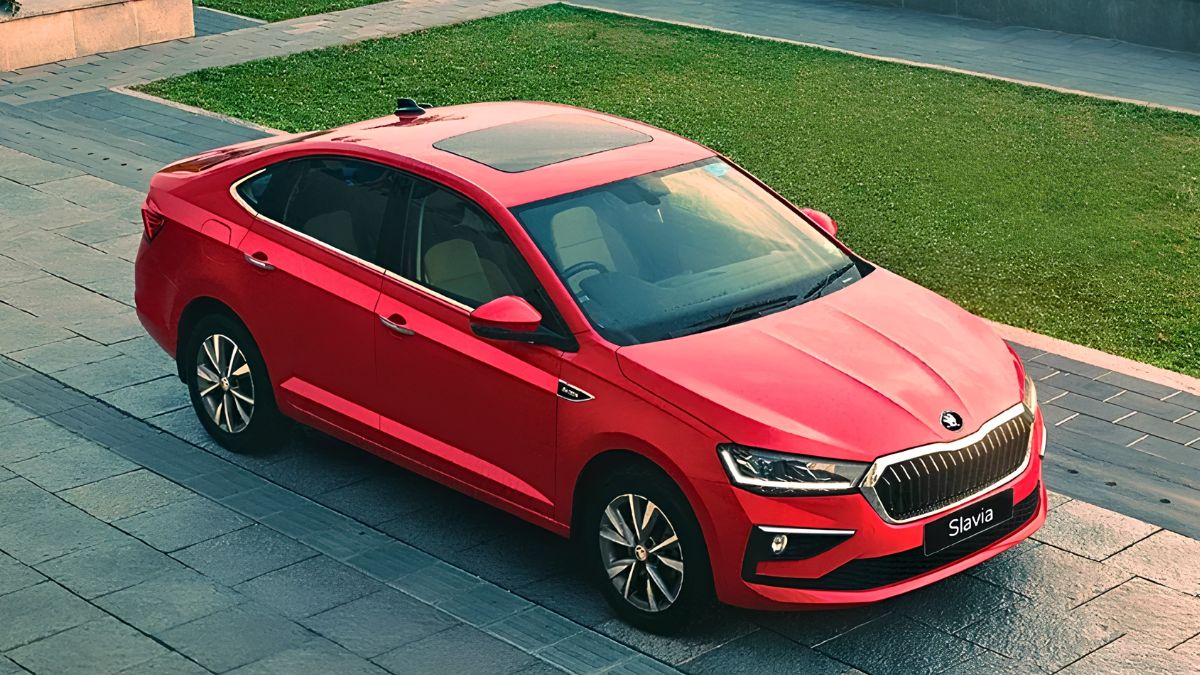
The Skoda Slavia has consistently positioned itself as one of the more engaging sedans in the midsize segment. Its combination of turbo-petrol performance, stable highway manners, and European-style driving dynamics has helped it maintain a loyal following among enthusiasts. However, as the updated Slavia facelift approaches launch in India, the discussion around the car is extending beyond cosmetic updates and feature additions.
For Skoda India, the facelift represents an opportunity to address some of the ownership concerns that continue to influence buying decisions. While the Slavia remains respected for its driving experience, questions surrounding air-conditioning performance, DSG gearbox reliability, and maintenance costs still appear frequently in customer discussions and online forums.
In a shrinking sedan market where buyers tend to research more carefully before purchasing, ownership confidence could become just as important as design and technology upgrades.
Position
The Slavia entered the Indian market as part of Skoda’s strategy to strengthen its local portfolio under the MQB-A0-IN platform. Positioned against rivals such as the Hyundai Verna, Honda City, and Volkswagen Virtus, the Slavia focused heavily on driving appeal.
Its engine lineup has remained one of its strongest selling points. The 1.0-litre TSI engine delivers a balance between performance and efficiency, while the larger 1.5-litre TSI offers stronger acceleration and refined cruising ability. Combined with confident handling characteristics, the Slavia continues to appeal to buyers who prefer sedans with a more involving driving experience.
Even after several years in the market, the car still feels competitive in terms of ride quality, cabin space, and overall road manners.
Concerns
Despite these strengths, ownership-related concerns continue to affect public perception around Skoda vehicles in India. Some of these concerns are based on older ownership experiences, while others are amplified through online discussions and social media.
One commonly discussed issue is cabin cooling performance during extreme summer conditions. Although updates and recalibrations have been introduced over time, some buyers still compare the Slavia’s AC effectiveness unfavorably against rivals from Korean and Japanese manufacturers.
Another major topic remains the DSG automatic gearbox. The DSG transmission is appreciated for its quick shifts and smooth performance, but long-term reliability concerns continue to influence customer confidence. Buyers often worry about potential repair costs once warranty coverage expires.
Maintenance costs also remain part of the ownership discussion. While Skoda has introduced service packages and maintenance plans aimed at reducing expenses, the perception of relatively higher service costs still exists among many prospective buyers.
The following table highlights the major ownership concerns frequently associated with the Slavia:
| Concern | Buyer Perception |
|---|---|
| AC Performance | Cooling may feel weaker in peak summers |
| DSG Reliability | Concerns about expensive repairs |
| Maintenance Costs | Higher service expenses over time |
| Spare Part Pricing | Replacement parts seen as costly |
| Service Reach | Limited network in smaller towns |
Segment
The challenges become more significant because the midsize sedan segment itself has become increasingly limited in volume. SUVs now dominate most price categories due to their practicality and market demand.
As a result, sedan buyers today often represent a more research-oriented customer base. These buyers typically evaluate ownership costs, reliability records, after-sales support, and resale value before making a final decision.
This means cosmetic changes alone may not have the same impact they once did. New alloy wheels, connected lighting elements, or revised bumpers may improve showroom appeal, but they may not directly influence long-term buyer confidence.
For a sedan like the Slavia, practical ownership improvements could play a more important role in sustaining demand.
Improvements
The facelift offers Skoda an opportunity to respond to these concerns in meaningful ways. Improvements focused on ownership experience could strengthen the Slavia’s position more effectively than cosmetic updates alone.
Enhancing AC performance for Indian climate conditions would directly address one of the most common complaints. Similarly, increasing communication around gearbox durability, warranty support, and service transparency could help reassure buyers considering automatic variants.
Extended warranty packages may also become an important factor. Many customers now look for longer warranty coverage as a way to reduce uncertainty around future repair costs.
Service transparency could also help improve buyer confidence. Clearer maintenance schedules, predictable servicing costs, and wider availability of spare parts can positively influence long-term ownership satisfaction.
These measures may appear less visible than feature additions, but they often matter more over the course of ownership.
Competition
Competition in the midsize sedan segment has also evolved. Rivals such as the Hyundai Verna and Honda City continue to focus heavily on ownership comfort, reliability perception, and service support alongside product updates.
The Slavia already competes strongly in areas like driving engagement and highway stability. However, maintaining competitiveness in today’s market increasingly requires balancing performance with low-stress ownership.
This balance becomes especially important for family buyers who prioritize long-term reliability over outright driving performance.
Trust
For Skoda India, the facelift may ultimately be less about redesigning the car and more about reinforcing customer trust.
The company has already taken steps in recent years to improve service support, introduce maintenance packages, and localize manufacturing to control costs. However, changing public perception often takes time, particularly in a market where ownership stories spread quickly through digital platforms.
A stronger ownership proposition could significantly improve the Slavia’s appeal beyond enthusiast circles. Buyers who may currently admire the sedan’s performance and design from a distance could become more willing to consider it seriously if concerns around reliability and running costs are addressed more clearly.
Outlook
The Indian sedan market may no longer deliver the same sales volumes as SUVs, but it continues to attract buyers who value driving comfort, stability, and traditional sedan characteristics.
The Slavia remains one of the more capable products in this segment. Its driving dynamics, turbocharged engines, and refined road behavior still help it stand apart from many alternatives.
With the upcoming facelift, Skoda has the opportunity to strengthen not only the car’s appearance but also the overall ownership experience surrounding it.
Because for many buyers today, the decision is no longer based solely on how a car feels during a test drive. It also depends on how reassuring and predictable the ownership journey feels over several years.
If Skoda can successfully improve ownership confidence while retaining the Slavia’s core strengths, the facelift could help the sedan maintain its relevance in an increasingly SUV-focused market.
FAQs
What is the main focus of the Slavia facelift?
Improving ownership confidence.
Does the Slavia offer turbo-petrol engines?
Yes, with 1.0L and 1.5L options.
Why is DSG reliability discussed often?
Buyers worry about long-term repairs.
Is AC performance a common concern?
Some owners and buyers think so.
Will the facelift improve market appeal?
It could with better ownership support.