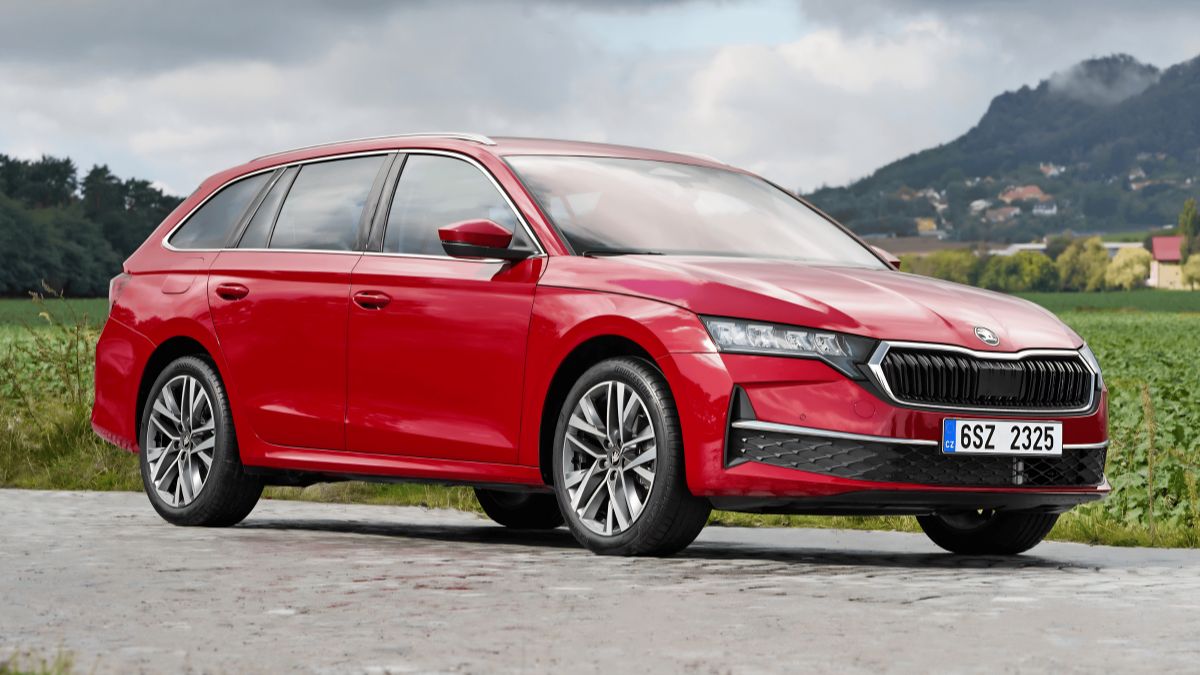
Skoda has expanded the Octavia lineup with a new strong-hybrid powertrain, giving the popular model a more electrified option without requiring owners to plug the car into a charger. The new setup combines a 1.5-litre TSI evo2 petrol engine with a compact battery and electric motor, allowing the car to operate using different power modes depending on driving conditions.
The new hybrid Octavia is currently available in Skoda’s home market, the Czech Republic, where the model is offered in both hatchback and estate body styles. For buyers who want some of the benefits of electric driving without depending on charging infrastructure, the system takes a different approach from a plug-in hybrid.
There is still no official confirmation about an India launch, but the addition is important because it marks the Octavia’s move towards a stronger form of electrification.
Powertrain
At the heart of the new Octavia hybrid is Skoda’s 1.5-litre TSI evo2 petrol engine. It works with a traction motor and a 1.6kWh battery pack.
Unlike a plug-in hybrid, the battery does not need to be connected to an external charger. Instead, the system generates and stores electrical energy while the car is being driven. Regenerative braking also helps replenish the battery by recovering energy that would otherwise be lost during deceleration.
The combination gives the Octavia several ways to distribute power. This allows the powertrain to adjust its operation according to speed, load and driving conditions.
Four Modes
The hybrid system can operate in EV-only, series, parallel and mixed modes. Each mode serves a different purpose.
In EV-only operation, the electric motor can drive the vehicle without the petrol engine being used. This can be useful in situations where the required power is relatively low, such as slower urban driving.
Series operation takes a different approach. Here, the petrol engine drives a generator, which produces electricity for the traction motor. The electric motor then drives the wheels.
In parallel operation, both the petrol engine and electric motor contribute to driving the wheels. Skoda says this mode works at speeds above 60kmph, allowing the two power sources to work together when additional performance or efficiency is required.
The system can also use a mixed operating strategy, switching between the different methods as required. Think of it as having several tools available rather than relying on one fixed way of powering the car.
Battery
The 1.6kWh battery is relatively small compared with the batteries used in fully electric cars and plug-in hybrids. That is intentional.
A strong hybrid does not need a large battery because its main purpose is to provide short bursts of electric driving and assist the petrol engine. The battery can be replenished while driving through the hybrid system and regenerative braking.
This also means owners do not have to install a home charger or plan journeys around charging stations. The petrol engine continues to provide the range expected from a conventional combustion-powered car, while the electric system helps improve efficiency.
The approach could be particularly useful for drivers who regularly travel through cities but still need a petrol engine for longer journeys.
Output
Skoda offers the 1.5-litre hybrid system in two power outputs. Depending on the version, the powertrain produces either 134bhp or 167.5bhp.
The higher-output version should provide stronger acceleration when the engine and electric motor work together. The lower-output version, meanwhile, is likely to focus more heavily on everyday usability and efficiency.
The electric motor also provides an additional source of torque, which can make the car feel more responsive when moving away from a standstill or accelerating at lower speeds.
Exact performance figures, fuel economy and emissions can vary according to the chosen body style and powertrain specification.
Body Styles
The new hybrid system is not limited to one version of the Octavia. In the Czech Republic, the model is available as both a hatchback and an estate.
The estate version is particularly relevant for buyers who need additional luggage capacity without moving into an SUV. The Octavia has traditionally occupied a practical position in Skoda’s lineup, and offering the hybrid system across different body styles gives customers more flexibility.
The hatchback, meanwhile, remains suited to buyers who want a more conventional family car with a relatively compact footprint.
Offering the same basic hybrid technology across both versions also means customers do not necessarily have to sacrifice practicality to choose the electrified powertrain.
Equipment
The new hybrid Octavia also receives several notable equipment features.
A 13-inch central touchscreen serves as the main infotainment display, while a 10-inch instrument cluster provides information to the driver. These displays are part of the technology-focused interior offered with the updated model.
The hybrid version can also be identified by a hybrid badge on the tailgate.
Beyond the visual identification, the most important difference remains underneath the bodywork. The combination of the 1.5 TSI engine, electric motor and 1.6kWh battery changes how the Octavia manages power compared with a conventional petrol model.
Efficiency
The main attraction of a strong hybrid is not simply the ability to drive on electricity for short periods. It is the way the petrol engine and electric motor can work together to reduce unnecessary fuel consumption.
In a conventional petrol car, energy produced during braking is largely lost as heat through the braking system. In the Octavia hybrid, regenerative braking allows some of that energy to be recovered and stored in the battery.
The stored energy can then be used by the electric motor. During suitable driving conditions, the engine can also be switched off while the electric motor takes over.
This creates a cycle in which the car can recover energy, store it and use it later. The battery may be small, but it plays a supporting role throughout the drive.
India
There is currently no official word on whether Skoda will introduce the new strong-hybrid Octavia in India.
That question is particularly relevant because the Octavia has previously been sold in the Indian market and remains a familiar name among premium sedan buyers. However, bringing a new powertrain to India depends on several factors, including pricing, local regulations, demand and Skoda’s broader product strategy.
The European-market hybrid technology does not automatically mean an India launch will follow. Skoda would need to make a separate decision based on the requirements of the Indian market.
For now, the new powertrain remains a Czech-market offering.
References
- Skoda Auto – Official Website
- Skoda Octavia – Official Model Information
- Skoda India – Official Website
The new Skoda Octavia strong hybrid takes a middle path between a conventional petrol car and a plug-in hybrid. Its 1.6kWh battery is small, but the system can use electric-only, series, parallel and mixed operation to make better use of the available energy. With 134bhp and 167.5bhp versions, hatchback and estate body styles, and no requirement for external charging, the technology gives the Octavia another option for buyers looking for lower-emission motoring without changing the way they refuel their car. Whether this powertrain eventually reaches India remains unconfirmed.
FAQs
What engine does the Octavia hybrid use?
It uses a 1.5-litre TSI evo2 petrol engine.
How large is the hybrid battery?
The battery has a capacity of 1.6kWh.
Does the Octavia hybrid need charging?
No, it is a self-charging hybrid.
What power outputs are offered?
The system produces 134bhp or 167.5bhp.
Will it launch in India?
Skoda has not confirmed an India launch yet.