Citroen is bringing one of its most recognisable automotive names back into the spotlight with the revealing of the new 2CV concept at the Paris Motor Show 2026. The modern interpretation revives the spirit of the original car nearly 36 years after production ended, combining its distinctive design philosophy with the potential for affordable electric mobility.
The concept is more than a nostalgic tribute. It previews a small electric vehicle that could become Citroen’s most affordable EV when it reaches the market in 2028. While the French automaker has yet to disclose technical specifications, the concept offers an early look at how the brand could combine retro styling, practical packaging and electric power for everyday drivers.
Revival
The original Citroen 2CV was designed to make personal transport accessible to a broad section of the population. Its simple engineering, practical design and focus on affordability helped it become an important part of French automotive history.
The new concept seeks to carry that philosophy into the electric era. Instead of simply copying the classic model, Citroen has reinterpreted its familiar design features for a modern hatchback.
The timing is significant as carmakers across Europe continue to explore ways to make electric vehicles more accessible. Smaller electric cars can help address urban driving needs, particularly where compact dimensions, lower running costs and easier parking are important considerations.
Citroen has indicated that a production-ready model based on the concept is expected to arrive in 2028. However, the final design, equipment list, pricing and specifications have not yet been confirmed.
Exterior
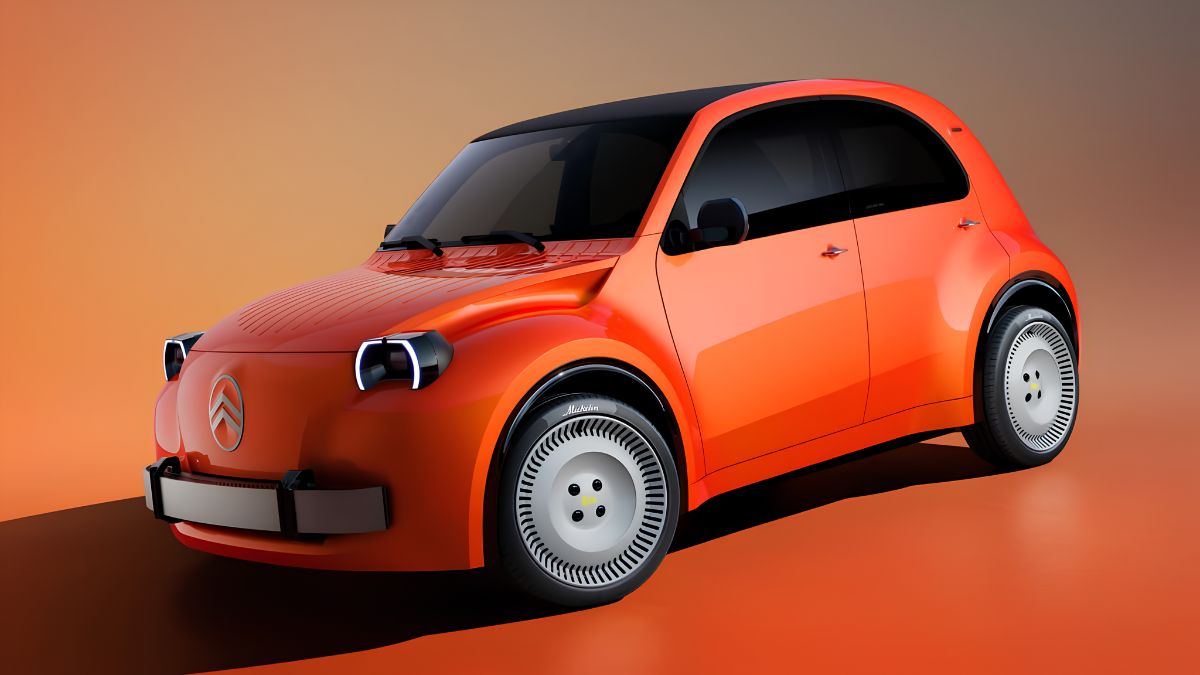
The concept retains the playful character associated with the original 2CV while introducing contemporary styling. At the front, the headlamps and lower bumper element combine to create a broad, smile-like expression. This gives the car a friendly appearance rather than the aggressive styling often seen on modern vehicles.
The side profile features a four-door layout, making the concept more practical for daily use. Deep-dish wheels add visual character, while the overall hatchback shape suggests an emphasis on manoeuvrability and efficient use of space.
At the rear, the roofline appears to flow into the back of the car as a single visual element. A blacked-out section across the rear, featuring a prominent Citroen logo, adds a modern contrast to the rest of the bodywork.
These details show how Citroen is using familiar visual cues without turning the concept into an exact replica of the original. The aim appears to be a compact, recognisable car with its own identity.
Interior
The cabin follows the same retro-modern approach as the exterior. The original 2CV was known for its straightforward, functional interior, and the new concept takes inspiration from that simplicity while incorporating modern technology.
A central display brings the cabin into the digital era, although Citroen has not confirmed the final infotainment system or its features. The concept also uses a distinctive colour combination, with yellow and white elements across the dashboard creating a bright, unconventional atmosphere.
Two features stand out. The first is a picnic basket-style centre console with a single cup holder, adding a playful touch to the cabin. The second is a fabric sunroof, which recalls the open-air character associated with the original 2CV.
Whether these features make it into the production car remains uncertain. Concept vehicles often include design elements that are simplified or replaced before reaching showrooms. Even so, the interior suggests that Citroen wants its future entry-level EV to feel different from a conventional budget hatchback.
Powertrain
Citroen has not announced the battery capacity, motor output, charging speed or platform details for the 2CV-inspired electric car. Any technical estimates should therefore be treated as speculation rather than confirmed specifications.
Given the concept’s compact proportions and anticipated positioning below €15,000, a front-wheel-drive layout could be a practical solution. It would help keep the mechanical package relatively simple while preserving cabin space.
A driving range of up to 350 kilometres on a full charge has also been suggested as a possible target. However, Citroen has not confirmed this figure, and the final range could vary depending on battery size, vehicle weight, driving conditions and the testing standard used.
The price will be particularly important. Affordable EVs need to balance battery cost, usable range and equipment without making too many compromises in everyday practicality. Citroen will have to get that balance right if the production model is to appeal to buyers looking for an electric car at an accessible price.
Pricing
The concept is expected to preview Citroen’s most affordable electric vehicle, with a potential starting price below €15,000. This would place it in the budget end of the European EV market, where purchase price remains one of the biggest barriers for consumers considering an electric vehicle.
However, the expected figure is not an official confirmed price. Final costs could depend on the battery option, trim level, local taxes, government incentives and the market in which the car is sold.
A low entry price could make the vehicle attractive to urban households, first-time car buyers and drivers who mainly cover shorter daily distances. Its compact size could also suit crowded city streets and limited parking spaces.
Still, affordability involves more than the sticker price. Buyers will also want to know how quickly the car charges, how much usable space it offers, what safety equipment comes as standard and how its real-world range performs in different weather conditions.
Competition
If Citroen brings the concept to production at the expected price, it could strengthen the brand’s position in the growing market for small electric cars. Its retro-inspired styling may help it stand apart from competitors that focus primarily on conventional hatchback design.
The challenge will be delivering distinctive styling without sacrificing the essentials. A small EV must provide enough range for regular journeys, reasonable charging times and practical seating and luggage space. It must also remain affordable to build and maintain.
The 2CV name gives Citroen a recognisable heritage to draw upon, but nostalgia alone will not guarantee commercial success. The production car will need to meet modern expectations for safety, comfort, technology and reliability.
The concept is also expected to provide a starting point for vehicles that could be developed for other brands within the wider Citroen group. If that happens, the underlying vehicle architecture could support multiple models with different styling and positioning. Citroen has not yet confirmed which brands or models might use the project.
Outlook
The return of the Citroen 2CV name signals an attempt to connect the company’s heritage with the future of affordable electric mobility. Its friendly exterior, colourful cabin and compact hatchback layout suggest a vehicle designed to stand out without losing sight of everyday usability.
The production model is expected in 2028, with a potential price below €15,000, although the final cost and technical specifications remain unconfirmed. Details such as battery capacity, charging performance, range and equipment will determine whether it can deliver genuine value rather than just retro appeal.
If Citroen can turn the concept’s personality into a practical and competitively priced electric car, the revived 2CV could become an important addition to Europe’s entry-level EV market.
FAQs
When will the new Citroen 2CV launch?
A production-ready model is expected in 2028.
What is the expected price of the new 2CV?
Its expected starting price is below €15,000, but this is unconfirmed.
Will the revived Citroen 2CV be electric?
Yes, the concept previews a small electric car.
What range could the electric 2CV offer?
A range of up to 350 km has been speculated, but not confirmed.

Has Citroen revealed the battery details?
No, battery capacity and powertrain specifications remain undisclosed.