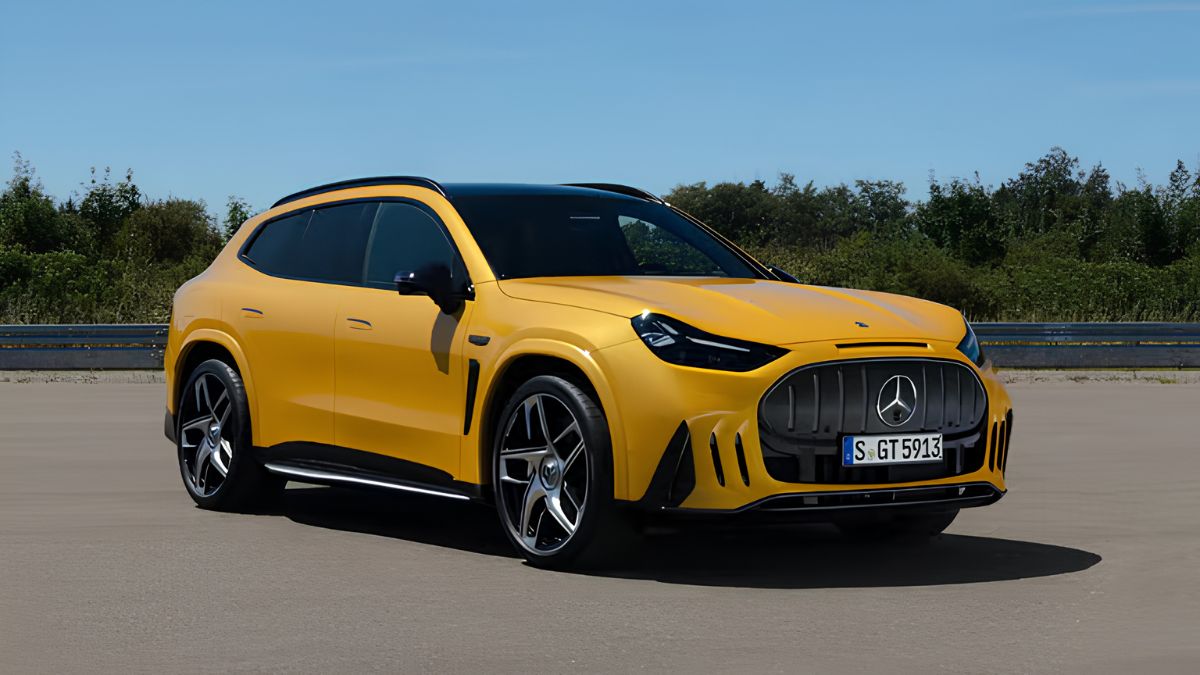
Mercedes-AMG has unveiled its new all-electric GT SUV, bringing supercar-level performance, a claimed driving range of up to 700km and an output of 1,169bhp in its flagship GT 63 variant. Revealed globally on 17 October 2026, the performance SUV will be offered in three versions: GT 53, GT 55 and GT 63.
Developed on the brand’s AMG.EA electric vehicle platform, the new SUV features an 800V electrical architecture and all-wheel drive across the range. While the GT 53 serves as the entry point with a dual-motor powertrain, the GT 55 and GT 63 offer significantly higher performance, with the top-spec model using three electric motors.
Mercedes-Benz has not announced pricing or an India launch timeline. The GT SUV is expected to target buyers seeking the acceleration and handling of a high-performance sports car in a more spacious, everyday-friendly body style.
Performance
The flagship Mercedes-AMG GT 63 SUV produces a claimed 1,169bhp and 2,000Nm of torque. According to the supplied specifications, it can accelerate from 0 to 100kmph in 2.5 seconds and from 0 to 200kmph in 6.8 seconds. Its claimed top speed is 270kmph when equipped with the optional Driver’s Package.
The GT 55 delivers 816bhp, while the GT 53 produces 544bhp through a dual-motor setup. All three variants feature all-wheel drive, although the more powerful versions use three axial-flux electric motors.
The figures position the GT 63 among the most powerful electric performance SUVs announced for this segment. However, actual acceleration and range can vary depending on conditions, equipment, temperature and driving style.
Battery
The GT 55 and GT 63 are equipped with a 128kWh battery pack and have a claimed WLTP driving range of up to 700km. The GT 53 uses a smaller 106kWh battery, with a claimed range of up to 668km.
The larger battery supports DC fast charging at a claimed peak rate of up to 710kW. Under suitable charging conditions, Mercedes-AMG says the GT 55 and GT 63 can add up to 450km of range in around 10 minutes.
These charging figures depend on access to compatible high-power charging infrastructure and the battery’s state of charge and temperature. The maximum charging rate should not be interpreted as a constant speed throughout a charging session.
The 800V architecture is designed to support rapid energy transfer and high-performance driving. The final real-world range will depend on factors such as road speed, weather, passenger load and the use of climate control.
Design
The Mercedes-AMG GT SUV combines the proportions of a large luxury SUV with styling cues associated with the GT performance range. Its exterior features an illuminated front grille, star-shaped daytime running lights, muscular wheel arches and broad rear shoulders.
A sloping roofline gives the SUV a sportier profile, while active aerodynamic components and a deployable rear spoiler are designed to manage airflow. These features aim to balance the vehicle’s visual presence with stability and efficiency at higher speeds.
The overall design reflects the purpose of the AMG.EA platform: delivering high performance without abandoning the space and practicality expected from an SUV. More details about the vehicle’s exterior and engineering are available on the official Mercedes-AMG GT SUV website.
Interior
The cabin follows a driver-focused layout, with digital displays and performance-oriented controls. The standard equipment described for the SUV includes a 10.2-inch digital instrument cluster and a 14-inch central touchscreen.
Buyers will also be able to choose additional features, including a 14-inch passenger display, a panoramic SKY CONTROL glass roof and a Burmester 4D surround sound system. These options are intended to combine the technology expected in a luxury vehicle with the more performance-focused character of an AMG model.
The passenger display could provide a separate screen for entertainment and selected vehicle functions, depending on the final market specification. Equipment availability may differ by variant and country.
Mercedes-AMG has positioned the GT SUV as more than an electric vehicle built around acceleration figures. Its interior equipment and long-distance range are also intended to make it suitable for everyday driving and extended journeys.
Handling
The GT SUV’s performance package includes AMG ACTIVE RIDE CONTROL+ suspension, rear-wheel steering and AMG Performance 4MATIC+ all-wheel drive. Together, these systems are designed to help manage the vehicle’s weight, improve cornering response and maintain stability.
Active suspension technology can adjust the vehicle’s body movements during acceleration, braking and cornering. This is particularly relevant for a powerful electric SUV, where the battery pack adds considerable mass and the motors can deliver substantial torque almost instantly.
Rear-wheel steering can improve manoeuvrability at lower speeds and support stability during faster driving. The all-wheel-drive system distributes torque between the axles according to driving conditions.
The GT 63 also comes with carbon-ceramic brakes as standard, according to the supplied specifications. These brakes are designed to handle high temperatures and repeated heavy braking, making them relevant to a vehicle with the GT 63’s claimed acceleration and top speed.
Mercedes-AMG’s official AMG.EA technology overview explains the wider engineering approach behind its new electric performance architecture, including axial-flux motors, battery cooling and 800V technology.
Launch
The GT 53 is scheduled to go on sale first, with the GT 55 and GT 63 expected to follow in spring 2027. Mercedes-Benz has not yet confirmed an India launch date or local pricing.
If the model reaches India, its positioning will depend on the final variant selection, import strategy, equipment and applicable taxes. The GT 63’s high output and specialised hardware suggest it would occupy the upper end of the luxury electric SUV market.
For prospective buyers, the key factors will extend beyond headline power figures. Charging infrastructure, real-world range, after-sales support and the availability of suitable high-power chargers will all influence the ownership experience.
The claimed 700km WLTP range is a laboratory-based figure and should not be treated as a guaranteed distance under Indian driving conditions. Highway speeds, hot weather, air-conditioning use and traffic can affect how far an electric vehicle travels between charges.
Outlook
The Mercedes-AMG GT SUV introduces a new electric performance option with three power levels, a claimed range of up to 700km and a flagship output of 1,169bhp. Its combination of axial-flux motors, rapid charging capability and performance-focused chassis technology makes it a significant addition to the brand’s electric ambitions.
The GT 53 will provide the entry point to the range, while the GT 55 and GT 63 are aimed at buyers seeking higher output and faster performance. The larger battery in the more powerful variants also gives them the longer claimed range.
For India, the most important unanswered questions remain pricing, launch timing and local specifications. Until Mercedes-Benz confirms those details, buyers should treat the model’s availability and final equipment as unannounced.