Hyundai is preparing to announce the prices of the 2026 Bayon in India, adding another model to its SUV portfolio. The upcoming vehicle is expected to target buyers looking for a petrol-powered SUV with modern styling, an automatic transmission option, and a comprehensive list of comfort and safety features. Pre-bookings have opened for Rs. 11,000 through Hyundai’s official website and authorised dealerships, giving interested customers an opportunity to reserve the vehicle before prices are revealed.
The new Hyundai Bayon is expected to enter a competitive market where buyers compare engine performance, cabin technology, safety equipment, and overall ownership costs before making a purchase. Its expected specifications include a 1.5-litre naturally aspirated petrol engine, six-speed manual and CVT transmission options, dual 10.25-inch displays, ventilated front seats, a panoramic sunroof, and Level 2 ADAS Pro.
However, the final assessment will depend on the announced prices, variant-wise equipment, and the availability of individual features. Here is a closer look at what is known about the upcoming Hyundai Bayon and what prospective buyers should consider before booking it.
Launch
Hyundai is scheduled to announce the Bayon’s prices in India tomorrow. The launch will clarify where the SUV sits within the company’s existing range and how it is positioned against other vehicles in the competitive midsize SUV market.
The Bayon is expected to appeal to customers seeking a combination of everyday practicality and modern equipment. Its positioning is particularly relevant as Hyundai continues to develop its SUV portfolio for different customer requirements and price brackets.
The Hyundai Creta remains an important reference point for buyers considering a vehicle in this category. However, the Bayon’s exact positioning, dimensions, and relationship with other Hyundai SUVs should be assessed using the final specifications rather than assumptions based on the segment alone.
Customers can follow the company’s official announcements through the Hyundai Motor India website, which provides information about its vehicles, features, and dealership network.
Booking
Pre-bookings for the new Hyundai Bayon are open for Rs. 11,000. Customers can register their interest through Hyundai’s official website or by visiting an authorised dealership.
The booking amount allows prospective buyers to reserve the vehicle ahead of the official price announcement. Nevertheless, customers should confirm the booking terms, cancellation policy, refund conditions, and expected delivery schedule with the dealership before paying.
The announced prices will be important for buyers who are comparing the Bayon with other petrol-powered SUVs. The starting price alone will not provide the complete picture, as the equipment offered on each variant and the cost of the automatic transmission option can influence the overall value.
Customers should also check whether the booking amount is adjusted against the final purchase price and whether any additional charges apply during the purchase process.
Engine
The 2026 Hyundai Bayon is expected to launch with a single petrol engine option. The powertrain comprises a 1.5-litre, four-cylinder, naturally aspirated petrol engine producing 113bhp and 144Nm of torque.
Power will be sent to the front wheels through either a six-speed manual gearbox or a continuously variable transmission (CVT). This gives buyers a choice between a conventional manual setup and an automatic option suited to daily commuting.
The naturally aspirated engine does not use a turbocharger to increase power output. Its performance characteristics will depend on factors such as engine tuning, vehicle weight, gearing, and the way power is delivered across the rev range. Actual fuel efficiency and driving performance will need to be evaluated after the vehicle’s final specifications and real-world figures become available.
The manual transmission may suit drivers who prefer greater control over gear selection. Meanwhile, the CVT could be a practical choice for those who regularly encounter stop-and-go traffic, although its driving characteristics will depend on Hyundai’s calibration.
Hyundai has ruled out turbo-petrol and diesel options for now. A CNG version could potentially join the range later in the vehicle’s lifecycle, but no confirmed launch timeline has been provided for such a variant.
The expected powertrain specifications are summarised below.
| Specification | Hyundai Bayon |
|---|---|
| Engine capacity | 1.5 litres |
| Engine configuration | Four-cylinder |
| Fuel type | Petrol |
| Aspiration | Naturally aspirated |
| Maximum power | 113bhp |
| Peak torque | 144Nm |
| Manual transmission | Six-speed |
| Automatic transmission | CVT |
| Driven wheels | Front wheels |
| CNG option | Possible in the future, not confirmed |
Buyers should wait for the official technical specifications and certified fuel-efficiency figures before comparing running costs with competing vehicles.
Design
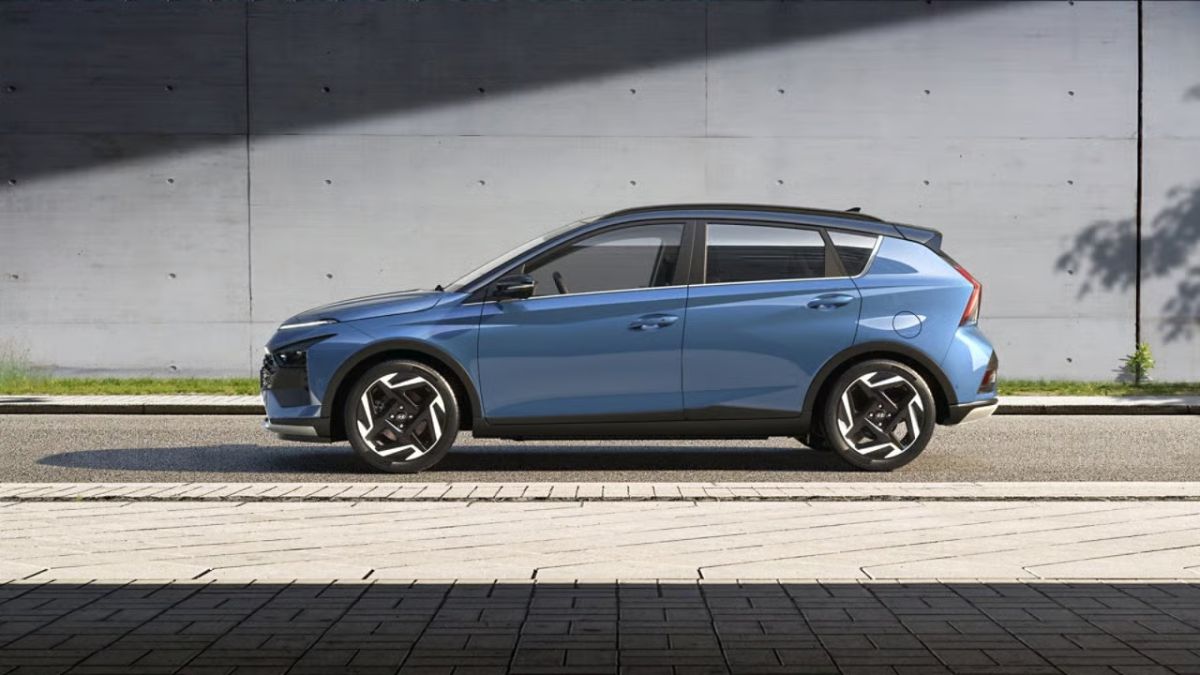
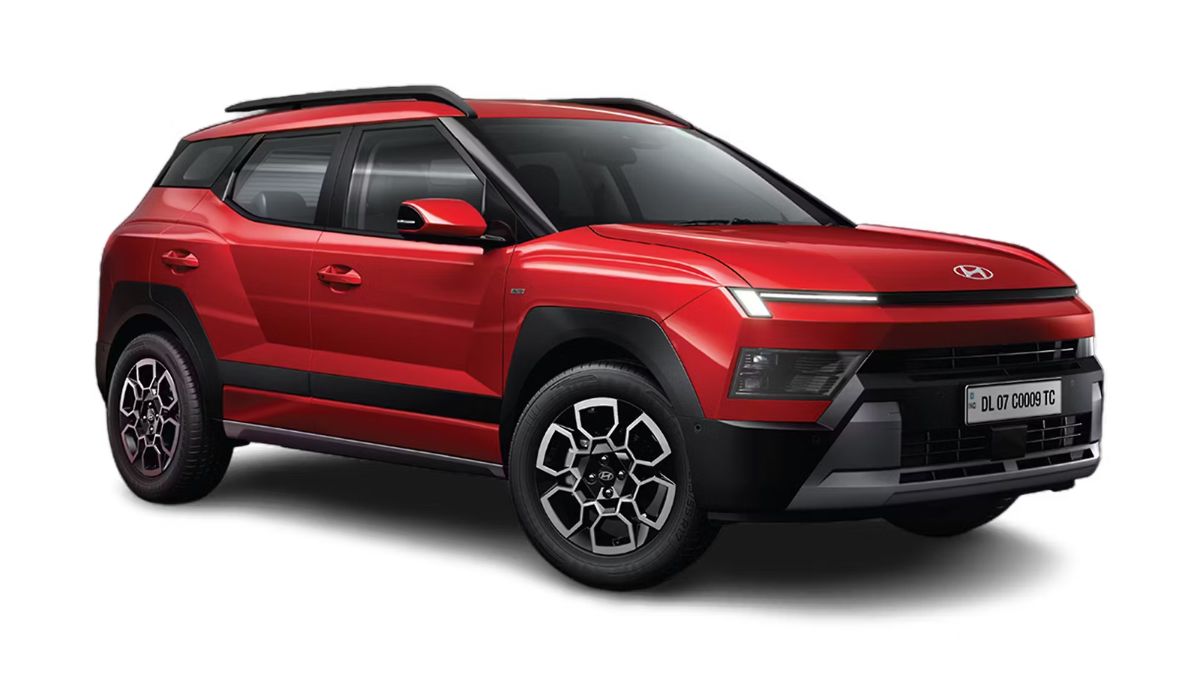
The new Hyundai Bayon is expected to feature a contemporary exterior with split headlamps and split taillights. Its lighting arrangement includes inverted L-shaped elements for the LED daytime running lights and brake lights, creating a distinctive visual identity.
The front-end design is expected to combine these lighting elements with a modern grille treatment. At the rear, the split lighting arrangement and Bayon lettering on the tailgate should help distinguish the SUV from other models in Hyundai’s lineup.
Other expected exterior details include large dual-tone alloy wheels, roof rails, a contrasting shark-fin antenna, and a dual-tone rear spoiler. Faux skid plates will add a rugged styling element, while body-coloured door handles and outside rear-view mirrors will provide a coordinated appearance.
These features contribute to the vehicle’s overall design, but their availability may vary by variant. Buyers should check the final variant list to establish which wheel designs, lighting elements, and exterior finishes are included in each version.
Exterior styling can influence a vehicle’s appeal, but practical considerations such as visibility, ground clearance, ease of entry, and rear-seat access will also matter to customers planning to use the Bayon as a family vehicle.
Interior
Inside, the Hyundai Bayon is expected to receive a technology-focused dashboard with dual 10.25-inch displays. The setup is designed to bring the digital instrument cluster and infotainment system together in a modern cabin layout.
A redesigned centre console and dual-tone upholstery are also expected. These details should give the interior a more contemporary appearance while providing space for frequently used controls and storage areas.
The overall usability of the cabin will depend on how effectively Hyundai integrates the displays, physical controls, storage compartments, and connectivity functions. Screen size alone does not determine convenience, so buyers should examine the interface and operating controls during a dealership visit.
Other expected equipment includes wireless charging, automatic climate control, and an auto-dimming inside rear-view mirror. These features can improve everyday convenience, particularly for customers who spend considerable time commuting or travelling with family.
Hyundai’s final equipment list will establish whether these features are standard or restricted to selected variants. Buyers should also check smartphone connectivity, available USB ports, rear-seat amenities, and luggage capacity before deciding which version suits their needs.
Features
The Bayon’s expected equipment package extends beyond its digital displays. Powered and ventilated front seats are among the notable comfort features, while a panoramic sunroof is expected to be another major addition.
Ventilated seats can help improve comfort in hot weather, particularly during the summer months. However, their effectiveness depends on the seat design and ventilation system. Customers should test the feature in person where possible.
The panoramic sunroof can make the cabin feel more open by allowing additional natural light into the interior. Buyers should consider its practical benefits alongside factors such as cabin temperature, headroom, and maintenance requirements.
Automatic climate control should help maintain the selected cabin temperature, while wireless charging can reduce the need for a charging cable when using compatible smartphones. The auto-dimming inside rear-view mirror is designed to reduce glare from vehicles approaching from behind in low-light conditions.
The expected feature list includes:
- Dual 10.25-inch screens
- Powered front seats
- Ventilated front seats
- Panoramic sunroof
- Dual-tone upholstery
- Redesigned centre console
- Wireless charging
- Automatic climate control
- Auto-dimming inside rear-view mirror
The final variant-wise specifications will determine how much of this equipment is available on the entry-level model and which features require customers to choose a higher trim.
Safety
Safety equipment is expected to be an important part of the Hyundai Bayon’s package. The SUV is set to feature six airbags, a tyre pressure monitoring system (TPMS), anti-lock braking system (ABS) with electronic brake-force distribution (EBD), and electronic stability control (ESP).
These systems serve different purposes. Airbags provide additional occupant protection during certain collisions, while ABS helps prevent wheel lock-up during hard braking. EBD distributes braking force according to driving conditions, and ESP can help the driver maintain directional control in certain situations.
The TPMS monitors tyre pressure and can alert the driver when pressure falls outside the system’s operating thresholds. Maintaining the correct tyre pressure remains important for vehicle handling, tyre life, and fuel efficiency.
The Bayon is also expected to offer Level 2 ADAS Pro, a suite of advanced driver-assistance technologies. Depending on the final configuration, such systems can support drivers through functions designed to assist with tasks such as maintaining a safe distance, staying within lane markings, or responding to potential hazards.
However, the exact ADAS functions, operating conditions, and variant availability need to be confirmed through the official specifications. Driver-assistance technology does not replace attentive driving, and the driver remains responsible for controlling the vehicle.
Customers seeking detailed safety information can also consult Hyundai Motor India’s official website for published vehicle information and updates. The final equipment list and any applicable safety ratings should be checked before placing an order.
Rivals
The Hyundai Bayon will enter a market where established SUV models compete on price, equipment, performance, and ownership costs. Its eventual competitive position will depend on the prices announced by Hyundai and how the different variants compare with alternatives available to Indian buyers.
The 1.5-litre naturally aspirated petrol engine gives the Bayon a straightforward powertrain offering. However, customers who prefer turbocharged performance or diesel engines may need to consider other models, as those options are not planned for the Bayon at launch.
The availability of a CVT is likely to be relevant to urban buyers who prioritise convenience in heavy traffic. Meanwhile, customers who travel long distances should compare fuel efficiency, highway performance, ride comfort, and luggage space across their shortlisted vehicles.
Equipment will also play a role in the comparison. A panoramic sunroof, ventilated seats, dual screens, and advanced driver-assistance systems can make a vehicle more appealing, but buyers should compare the actual prices of similarly equipped variants rather than relying solely on headline specifications.
For additional information about Hyundai’s broader vehicle portfolio and corporate announcements, buyers can visit the official Hyundai Motor Company global website. Indian customers should rely on Hyundai Motor India’s published prices and specifications for the vehicle offered in the domestic market.
Buying
Before booking the Bayon, prospective customers should consider several practical factors beyond the initial reservation amount.
First, compare the prices of the manual and CVT variants. The price difference between these versions will help establish whether the automatic transmission fits within the buyer’s budget.
Second, review the features available on each trim. Equipment such as ventilated seats, a panoramic sunroof, and ADAS can influence the decision, but customers should verify which features are included in the specific variant they intend to purchase.
Third, consider the expected cost of ownership. Fuel consumption, insurance, scheduled servicing, tyre replacement, and warranty coverage all contribute to the total cost of running a vehicle. Official fuel-efficiency figures and warranty details should be reviewed when Hyundai releases the complete specifications.
Finally, arrange a test drive before making the final payment. This can help buyers assess seat comfort, visibility, steering response, suspension behaviour, transmission operation, and the usability of the infotainment system.
The Rs. 11,000 booking amount provides an opportunity to register interest before the price announcement, but it should not replace a careful review of the final purchase terms.
The 2026 Hyundai Bayon is expected to combine a 1.5-litre petrol engine, manual and CVT transmission options, contemporary exterior styling, and a technology-focused cabin. Its expected safety equipment and comfort features could make it relevant to buyers considering a new family SUV.
However, the official prices, variant-wise equipment, fuel-efficiency figures, and delivery details will be important in determining its overall value. With pre-bookings open for Rs. 11,000, interested customers can register their interest now, but comparing the final specifications and taking a test drive before completing the purchase would be a sensible approach.
FAQs
When will the Hyundai Bayon launch in India?
Hyundai is scheduled to announce the Bayon’s prices tomorrow.
What is the Hyundai Bayon booking amount?
Pre-bookings are open for Rs. 11,000.
Which engine will power the Hyundai Bayon?
It is expected to get a 1.5-litre naturally aspirated petrol engine.
Which gearbox options will the Bayon offer?
The expected options are a six-speed manual and a CVT.

Will Hyundai launch a CNG Bayon?
A CNG version could arrive later, but it is not confirmed.