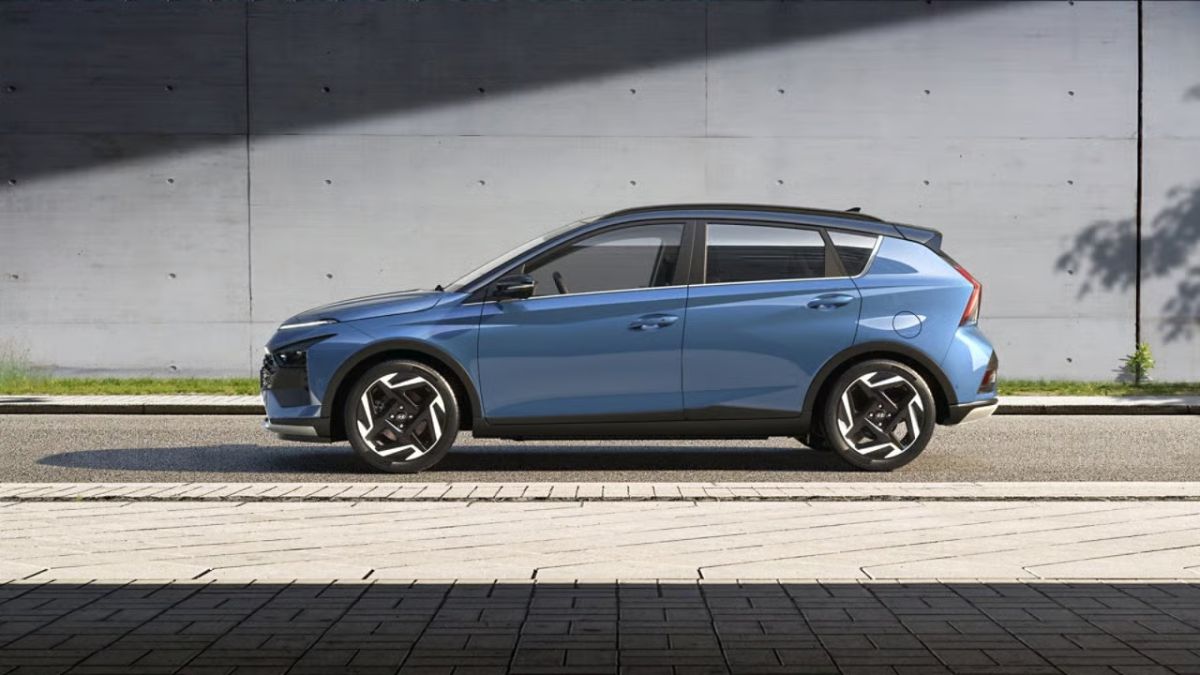
Hyundai is preparing to announce prices for the new Bayon SUV in India on October 26, 2026, with safety equipment emerging as one of the model’s key highlights ahead of its launch. The upcoming SUV will offer a range of active and passive safety features, including six airbags, electronic stability control, a Surround View Monitor and a Level 2 advanced driver assistance system (ADAS).
The Bayon is expected to occupy a position in Hyundai’s SUV portfolio around the Creta segment, giving buyers another option to consider in the competitive Indian SUV market. The company has also opened pre-bookings for Rs. 11,000 through its official website and authorised dealerships.
Hyundai has confirmed a package of 35 safety features across the variant range. However, the availability of individual advanced features may vary by variant, so buyers should check the final equipment list before making a booking decision.
The SUV will be offered with a 1.5-litre, four-cylinder, naturally aspirated petrol engine paired with either a six-speed manual gearbox or a continuously variable transmission (CVT). Prices are scheduled to be announced on October 26.
Safety
Hyundai has highlighted safety as a major part of the Bayon’s equipment package. The company says the SUV will offer 35 safety features, covering occupant protection, vehicle stability, parking assistance and driver awareness.
The confirmed equipment includes six airbags, anti-lock braking system (ABS) with electronic brakeforce distribution (EBD), electronic stability control (ESC), hill-start assist (HSA), emergency stop signal (ESS) and a tyre pressure monitoring system (TPMS).
Other listed features include a rollover sensor, headlamp escort function, central locking, an anti-theft alarm, rear parking sensors and ISOFIX child-seat anchorage points. The SUV will also feature three-point seat belts with reminders.
These systems serve different purposes. Airbags and seat belts help protect occupants during a collision, while ABS and ESC are designed to support braking and vehicle stability in demanding situations. Hill-start assist can help prevent the vehicle from rolling backwards when moving away on an incline.
The inclusion of tyre pressure monitoring and rear parking sensors also addresses everyday driving concerns. Maintaining appropriate tyre pressure can support safe handling, while parking assistance can help drivers judge distances when manoeuvring in confined spaces.
ADAS
The 2026 Hyundai Bayon will also be offered with a Level 2 Pro ADAS package. Advanced driver assistance systems use cameras, sensors and, where applicable, navigation information to help drivers monitor their surroundings and respond to potential hazards.
The announced package includes several collision warning and avoidance systems, lane assistance functions, driver monitoring features and adaptive cruise control technology.
Listed features include:
- Forward Collision Warning (FCW).
- Forward Collision-Avoidance Assist for cars, pedestrians, cyclists, junction turning and direct oncoming traffic.
- Blind-spot Collision-Avoidance Assist (BCA).
- Lane Keeping Assist (LKA) and Lane Departure Warning (LDW).
- Driver Attention Warning (DAW) and Safe Exit Warning (SEW).
- Blind-spot Collision Warning (BCW).
- Rear Cross-Traffic Collision Warning (RCCW) and Rear Cross-Traffic Collision-Avoidance Assist (RCAA).
- Smart Cruise Control with Stop and Go.
- Lane Following Assist (LFA) and High Beam Assist (HBA).
- Leading Vehicle Departure Alert (LVDA).
- Navigation-based Smart Cruise Control for specified zones and curves.
- Highway Driving Assist (HDA).
These features are intended to help reduce the driver’s workload and provide additional warnings or assistance in certain situations. Their effectiveness depends on road conditions, visibility, sensor performance and correct system operation.
Level 2 driver assistance does not make a vehicle autonomous. The driver remains responsible for steering, braking, monitoring the road and responding to hazards, even when assistance systems are active.
Visibility
The Bayon will feature a Surround View Monitor (SVM), which combines camera feeds to provide a view around the vehicle. This can help drivers judge the position of nearby objects when parking or manoeuvring in tight spaces.
The SUV will also offer a Blind-spot View Monitor (BVM), designed to improve visibility of areas that may be difficult to see in the exterior mirrors.
These technologies are particularly useful in busy urban environments, where vehicles, pedestrians and two-wheelers can approach from different directions. Rear Cross-Traffic Collision Warning and its associated avoidance function are intended to help when reversing out of parking spaces or driveways.
The SUV’s all-wheel disc brakes add another element to its safety equipment. Disc brakes are used to slow the vehicle, while the electronic braking and stability systems help manage braking performance and vehicle control in different conditions.
Although these features can provide useful assistance, drivers should continue to check mirrors, look around the vehicle and maintain an appropriate speed. Camera-based systems may also have limitations in poor lighting, heavy rain or situations where their views are obstructed.
Platform
The 2026 Bayon is based on Hyundai’s Global K Enhanced platform, according to the supplied vehicle details. The platform underpins the SUV’s overall vehicle architecture and supports the integration of its mechanical and electronic systems.
The combination of passive safety equipment, electronic stability systems, parking cameras and driver assistance technology suggests that Hyundai is placing considerable emphasis on the model’s safety offering.
However, the number of features alone does not establish how well a vehicle protects occupants in a crash. Independent crash-test results, where available, and details about the standard equipment fitted to each variant will provide additional information for buyers assessing overall safety.
Prospective customers should also verify whether the full Level 2 ADAS package is standard across all variants or reserved for selected versions. Although Hyundai has announced 35 safety features across the range, not every advanced function should automatically be assumed to be available on every trim.
Engine
Hyundai will offer the Bayon with a single engine option: a 1.5-litre, four-cylinder, naturally aspirated petrol unit.
The engine will be paired with a six-speed manual transmission or a CVT, giving buyers a choice between conventional manual gear changes and an automatic-style driving experience.
A naturally aspirated engine draws air into the cylinders without a turbocharger. Its performance and fuel efficiency will depend on the engine’s final specifications, vehicle weight, gearing and driving conditions.
Hyundai has not provided the engine’s power, torque or fuel-efficiency figures in the details supplied here. Those specifications, along with the final variant-wise equipment list, will help buyers make a more complete comparison with competing SUVs.
The availability of two transmission choices could appeal to different types of drivers. A manual gearbox offers greater direct control over gear selection, while a CVT is designed to provide smooth acceleration without conventional stepped gear changes.
Bookings
Pre-bookings for the Hyundai Bayon are already open at Rs. 11,000 through the company’s official website and authorised dealerships.
The booking amount allows interested buyers to register their interest ahead of the price announcement. Before paying, customers should review the applicable booking terms, cancellation policy and refund conditions with the dealership or through Hyundai’s official channels.
The price announcement is scheduled for October 26, 2026. Until then, buyers will need to wait for confirmed pricing and variant details to assess the SUV’s position against other models in the segment.
Hyundai’s final announcement should clarify the available trims, equipment distribution, engine specifications and prices. These details will be important in determining whether the Bayon’s extensive safety package is matched by competitive pricing.
Outlook
The Hyundai Bayon is approaching its Indian price announcement with a broad list of safety and driver assistance technologies. Six airbags, electronic stability control, a Surround View Monitor, blind-spot monitoring and Level 2 ADAS are among the features that distinguish its announced equipment package.
Its 1.5-litre naturally aspirated petrol engine, manual and CVT transmission options, and pre-booking programme provide the other main details currently available.
For buyers, the next step is to examine the final prices and compare the equipment available in each variant. The standard safety features, availability of ADAS, engine performance and ownership costs will all matter when evaluating the SUV against its rivals.
With prices due on October 26, Hyundai’s announcement should provide a clearer picture of the Bayon’s value proposition in India. Until the full specifications and variant-wise prices are confirmed, its safety equipment offers an indication of the features on offer, rather than a complete basis for judging its competitiveness.