
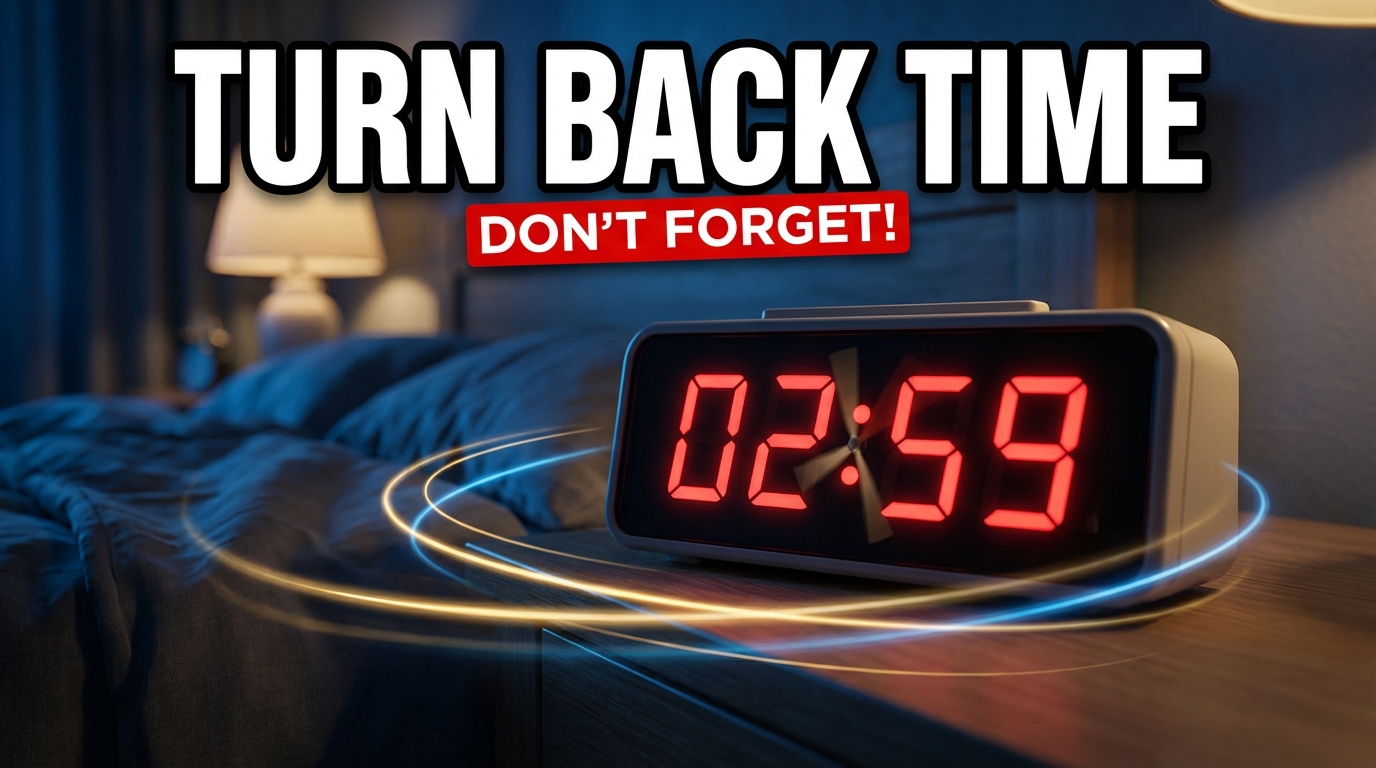
As autumn deepens, one familiar tradition returns. Daylight Saving Time 2026 brings the much-loved “fall back” shift, handing you an extra hour of sleep. While it sounds simple, this time change can ripple through schedules, health, and travel plans. Knowing the details helps you avoid confusion and make the most of the seasonal reset.
Timing
Daylight Saving Time 2026 ends on Sunday, November 1. At 2:00 a.m. local time, clocks move back one hour to 1:00 a.m., restoring standard time.
This adjustment marks the opposite of the spring change. Instead of losing sleep, you gain an hour. Mornings become brighter, evenings darker, and routines subtly shift. Planning keeps alarms, meetings, and travel on track.
Key facts at a glance:

| Detail | Information |
|---|---|
| Date | November 1, 2026 |
| Time | 2:00 a.m. → 1:00 a.m. |
| Result | Gain one hour |
| Season | Shift to standard time |
Meaning
The phrase “clocks fall back” simply means turning clocks backward by 60 minutes. Digital devices usually update automatically through network time servers. However, manual clocks, vehicles, and kitchen appliances still need attention.
There is also a unique overlap. The hour between 1:00 and 2:00 a.m. happens twice. Industries like aviation, healthcare, and event management treat this window carefully to avoid double bookings or logging errors.
History
The idea of Daylight Saving Time dates back over a century. Germany first adopted it in 1916 to conserve fuel during wartime. The United States expanded its use after World War II, refining rules during the 1970s energy crisis.
The original goal was simple. Use natural light better and reduce electricity use. Today, energy savings are debated, especially with efficient lighting. Still, retail, sports, and leisure industries often favor longer daylight hours.

Regions
Daylight Saving Time 2026 is not universal. Participation depends on location.
In the United States, most states observe it, except Hawaii and most of Arizona. Canada largely follows the same schedule. Europe also participates under coordinated rules, while many countries near the equator skip it due to consistent daylight year-round.



For accurate verification, official resources like timeanddate.com and the U.S. National Institute of Standards and Technology provide trusted updates.
Health
Although gaining an hour feels easier than losing one, your body clock still notices the change. Earlier sunsets can trigger sleepiness sooner, while mornings may feel refreshed.
Some people experience short-term effects such as:
- Mild fatigue
- Disrupted sleep
- Irritability
Children, older adults, and shift workers feel this most. Keeping sleep and meal times consistent helps your circadian rhythm adjust smoothly.
Tips
Preparation makes the transition almost effortless.
- Adjust bedtime gradually a few days before November 1
- Get morning sunlight to reset your body clock
- Limit caffeine and screen time late in the evening
- Check manual clocks on Saturday night
- Keep pets and children on familiar routines
That extra hour is perfect for rest, reflection, or planning the week.
Future
Debate continues worldwide about ending time changes altogether. Proposals like permanent daylight saving or permanent standard time surface regularly. For now, Daylight Saving Time 2026 follows the traditional schedule. Monitoring official announcements ensures you stay informed if rules change.
As November arrives, the “fall back” shift signals cozy mornings and earlier evenings. With a little preparation, you can turn Daylight Saving Time 2026 into a smooth reset rather than a disruption. Update your clocks, protect your sleep, and enjoy the seasonal rhythm that comes with standard time.
FAQs
When does DST end in 2026?
It ends on Sunday, November 1, 2026.
What time do clocks fall back?
At 2:00 a.m., clocks move back to 1:00 a.m.
Do all countries observe DST?
No, many countries never use Daylight Saving Time.
Do phones update automatically?
Yes, most connected devices change time automatically.
Is DST ending permanently in 2026?
No, current laws still require the change.