
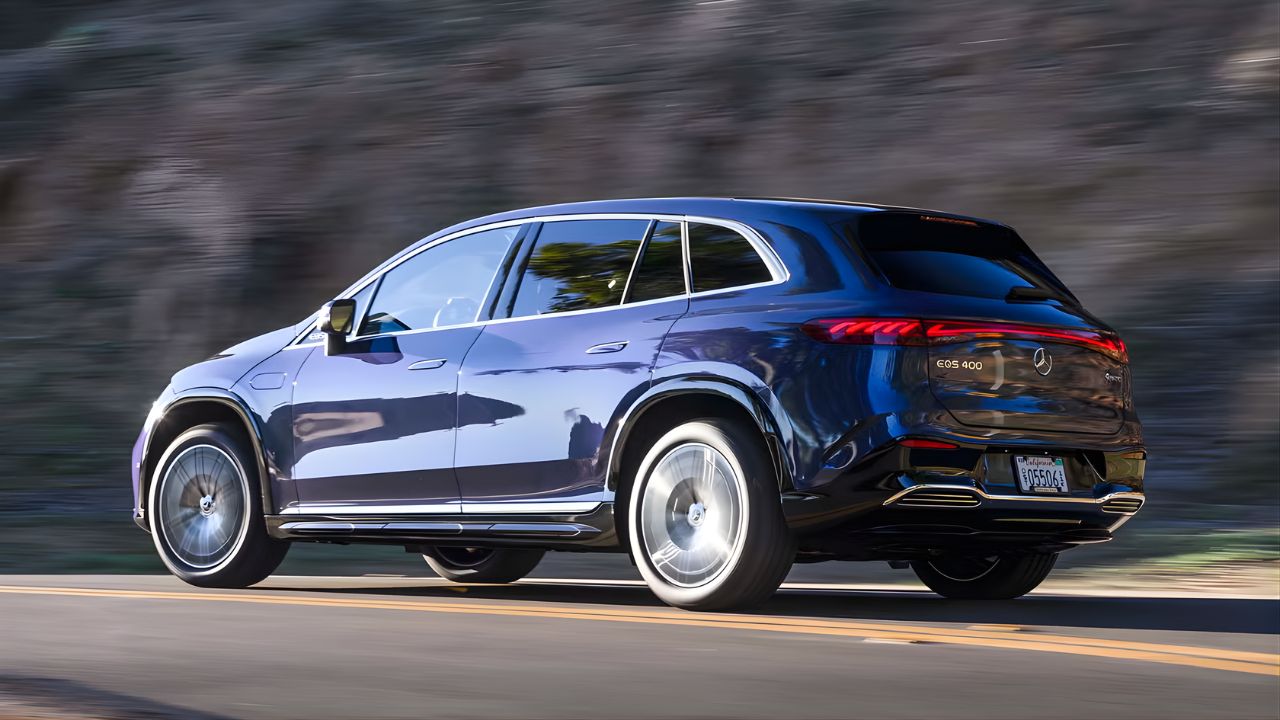
The Mercedes-Benz EQS facelift introduces a series of measured but meaningful updates to the brand’s flagship electric sedan.
With a claimed WLTP range of up to 926 km, a shift to 800V electrical architecture, and refinements in design and cabin technology, the updated EQS aims to remain competitive in the evolving luxury EV segment.
These changes focus on improving efficiency, usability, and overall driving experience while addressing earlier criticisms.
Power
A central upgrade in the EQS facelift is the transition from a 400V to an 800V electrical system. This change enhances energy efficiency and enables faster charging, aligning the EQS more closely with newer electric vehicle platforms.
The updated EQS offers a maximum WLTP range of up to 926 km, depending on the variant. Mercedes-Benz continues to offer multiple battery configurations, including a larger 122 kWh pack and a smaller 112 kWh unit for select trims.
Below is a summary of key powertrain specifications:
| Feature | Specification |
|---|---|
| Maximum Range | Up to 926 km (WLTP) |
| Battery Options | 112 kWh, 122 kWh |
| Charging Speed | Up to 350 kW DC |
| Range Gain | Approx. 320 km in 10 minutes |
| Regenerative Braking | Up to 385 kW |
The inclusion of a two-speed gearbox on the rear axle is another notable update. This system helps balance acceleration and efficiency by optimizing power delivery at both low and high speeds.
In addition, regenerative braking capacity has been increased to 385 kW, allowing for more effective energy recovery during deceleration.
Design
The exterior design of the EQS has been revised to better align with Mercedes-Benz’s broader styling language. The earlier model received mixed feedback for its rounded appearance, and the facelift introduces subtle changes to improve visual presence.
At the front, a larger faux grille and a redesigned bonnet create a more defined and upright look. The updated daytime running lights incorporate the Mercedes star motif, adding a recognizable brand signature.
These changes contribute to a more conventional luxury sedan appearance while retaining aerodynamic efficiency.
The Digital Light system has also been improved. In addition to offering better illumination, it now consumes up to 50 percent less energy, supporting overall efficiency improvements.
Interior
Inside, the EQS facelift retains the MBUX Hyperscreen, a wide glass panel integrating three displays across the dashboard. The system now operates on the latest MB.OS software, which improves responsiveness and supports over-the-air updates.
The updated interface includes enhanced voice recognition capabilities, allowing for more natural interaction between driver and vehicle. The system is designed to adapt over time, offering a more personalized user experience.
Rear-seat passengers benefit from optional 13.1-inch entertainment screens, adding to the vehicle’s focus on comfort and long-distance usability.
The cabin also introduces features such as heated front seatbelts, improved parking assistance, and a cloud-based predictive air suspension system that adjusts to road conditions in real time.
Ambient lighting has also been expanded to offer more customization, reinforcing the luxury positioning of the EQS.
Tech
One of the more advanced additions is the optional steer-by-wire system. This technology replaces the traditional mechanical connection between the steering wheel and the wheels with an electronic interface.
In practical terms, this reduces the amount of steering input required, particularly during low-speed maneuvers such as parking or turning in tight spaces. The system is paired with a yoke-style steering wheel, which further distinguishes the driving experience.
The facelift also enhances rear-wheel steering capability. With steer-by-wire, the rear wheels can turn up to 10 degrees, compared to 4.5 degrees in the earlier version. This significantly improves maneuverability in urban environments.
For buyers who prefer a conventional setup, Mercedes-Benz continues to offer the 10-degree rear-wheel steering system independently of the steer-by-wire configuration.
Charging
Charging performance has been improved with the adoption of 800V architecture. The EQS facelift supports DC fast charging of up to 350 kW under suitable conditions.
Mercedes-Benz states that the vehicle can gain approximately 320 km of range in around 10 minutes when connected to a compatible high-speed charger. This reduces charging time and enhances the practicality of long-distance travel.
The improved charging capability is particularly relevant as public charging infrastructure continues to expand globally, making high-speed charging more accessible.
Positioning
The EQS facelift reflects Mercedes-Benz’s approach to incremental refinement rather than a complete redesign.
By addressing key areas such as charging speed, system architecture, and design details, the company aims to keep the EQS competitive against newer electric sedans in the premium segment.
While the core identity of the EQS remains unchanged, the updates contribute to a more balanced offering that combines range, comfort, and advanced technology.
The Mercedes-Benz EQS facelift demonstrates how established models can evolve in response to technological progress and market expectations.
With improvements in efficiency, usability, and design, it continues to serve as a flagship representation of the brand’s electric ambitions.
FAQs
What is the EQS facelift range?
Up to 926 km WLTP range.
Does EQS support fast charging?
Yes, up to 350 kW DC charging.
What is steer-by-wire?
Electronic steering without a mechanical link.
Battery size in EQS facelift?
Up to 122 kWh battery pack.
Is the design improved in the facelift?
Yes, more refined and aligned styling.