
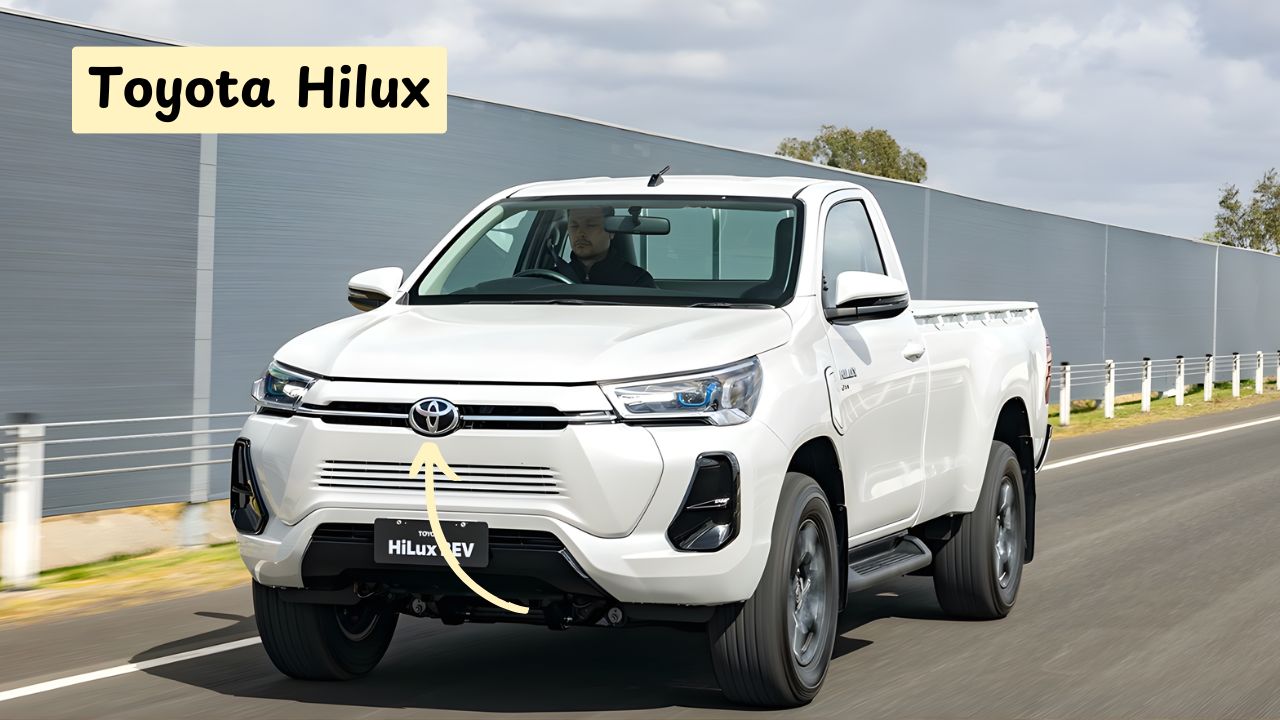
Toyota’s legendary pickup, the Hilux, is stepping into a new era with the debut of its ninth-generation model. The global unveiling marks a significant leap forward — both in design and technology. What’s even more exciting for Indian enthusiasts is that this all-new version, with its refreshed styling and advanced interior, is expected to arrive in India soon.
For the first time ever, the Hilux family goes electrified, offering a range of powertrain options including battery electric, mild-hybrid, and even a hydrogen fuel cell variant coming later this decade.
Powertrain
The highlight of the new Hilux lineup is the all-electric model, which will be introduced globally in December 2025. It packs a 59.2 kWh lithium-ion battery, paired with front and rear eAxles that provide permanent all-wheel drive and a combined torque output of over 470 Nm.
Despite switching to electric power, the Hilux maintains its legendary off-road strength thanks to its body-on-frame construction. It can handle the same wading depth as the diesel model and offers a payload capacity of 715 kg. The estimated driving range stands at 240 km (WLTP), making it suitable for both urban and light off-road duties.
Toyota isn’t stopping at electric power. The Hilux 48V hybrid, slated for production in spring 2026, combines the trusted 2.8-litre diesel engine with a 48V mild-hybrid system. The compact hybrid battery is cleverly placed under the rear seats to preserve cabin space. With a payload of one tonne and towing capability of 3,500 kg, it blends performance and efficiency seamlessly.
Engines
In select international markets, Toyota will continue to offer traditional engines. The smaller 2.4-litre diesel has been replaced by the more powerful 2.8-litre unit, while a 2.7-litre petrol engine remains available in markets that favor affordability and ease of maintenance.
For India, it’s expected that the new Hilux will retain similar engine and transmission options, especially the diesel-hybrid setup. This would allow Toyota to meet local preferences while introducing electrification in a phased manner.
Design
The ninth-generation Hilux carries a bold, modern identity built on Toyota’s new “Tough and Agile” design philosophy, inspired by the Land Cruiser. Its muscular stance, slimmer LED headlights, and revised front fascia lend a commanding presence.
Here’s a quick overview of key design updates:
| Design Feature | Description |
|---|---|
| Theme | Tough & Agile (Land Cruiser-inspired) |
| Headlights | Slim LED units |
| Grille | Modern, wide design |
| Layout | Double Cab only |
| Frame | Body-on-frame structure |
These enhancements combine classic toughness with a more refined urban appeal, ensuring the Hilux looks equally at home on city streets and rugged trails.
Interior
Inside, the new Hilux undergoes a complete transformation. The cabin adopts a horizontal dashboard layout, complemented by premium materials and advanced tech. Toyota has focused on enhancing comfort, convenience, and connectivity to make the Hilux more user-friendly for everyday driving.
The truck now features dual 12.3-inch digital screens — one for the instrument cluster and the other for infotainment. Added conveniences include wireless smartphone charging, rear USB ports, and connectivity through the MyToyota app, which allows users or fleet managers to track vehicle health, location, and service data remotely.
With the Double Cab layout, the pickup offers generous interior space, while clever packaging ensures that even hybrid versions retain full passenger comfort without compromise.
Technology
For the first time, the Hilux features electric power steering (EPS), improving low-speed manoeuvrability and offering more precise control off-road. This is a major shift from the older hydraulic system, making the driving experience smoother and more refined.
On the safety front, Toyota equips the new Hilux with its latest T-Mate suite, introducing several advanced driver-assistance technologies:
| Safety Feature | Function |
|---|---|
| Proactive Driving Assist | Prevents potential collisions |
| Low Speed Acceleration Suppression | Reduces unintended acceleration |
| Emergency Driving Stop | Stops the truck if the driver is unresponsive |
| OTA Updates | Ensures software remains up to date |
These systems bring the Hilux closer to Toyota’s passenger SUVs in terms of safety sophistication.
Future
Toyota has big plans for the Hilux lineup. The company has confirmed that a hydrogen fuel cell Hilux is on the roadmap, targeting production by 2028. This variant is expected to deliver zero-emission performance without sacrificing durability or range — setting the stage for the next phase of Toyota’s sustainable mobility vision.
In India, the Hilux has already gained traction among adventure seekers and lifestyle buyers, and the upcoming model will only strengthen its appeal. With a bolder design, electrified options, and advanced tech features, the new Hilux aims to blend rugged capability with modern sophistication.
Whether you’re an off-road enthusiast or simply value reliability with a touch of innovation, the new-generation Toyota Hilux is gearing up to be a game changer — rugged, refined, and ready for the future.
FAQs
When will the new Hilux launch?
The electric Hilux launches globally in December 2025.
Will India get the same design?
Yes, India is expected to receive the same design and interior updates.
What is the range of the Hilux EV?
The electric Hilux offers around 240 km on a full charge.
What engine will power the hybrid Hilux?
A 2.8-litre diesel paired with a 48V mild-hybrid system.
Is a hydrogen Hilux coming?
Yes, Toyota plans a hydrogen fuel cell Hilux by 2028.