Citroen is preparing to revive one of the most recognizable names in its history. The 2CV badge is set to return at the Paris Motor Show in October, where the French automaker is expected to reveal a new electric concept inspired by the original model.
The return marks a significant change for a nameplate that has been absent from Citroen’s lineup for 36 years. This time, the 2CV is expected to become an entry-level electric car aimed primarily at European buyers, with production reportedly planned for 2028.
While Citroen has not yet revealed all the technical details, early teasers provide a few clues about the design direction. The company appears to be combining familiar 2CV styling cues with a modern electric platform.
Design
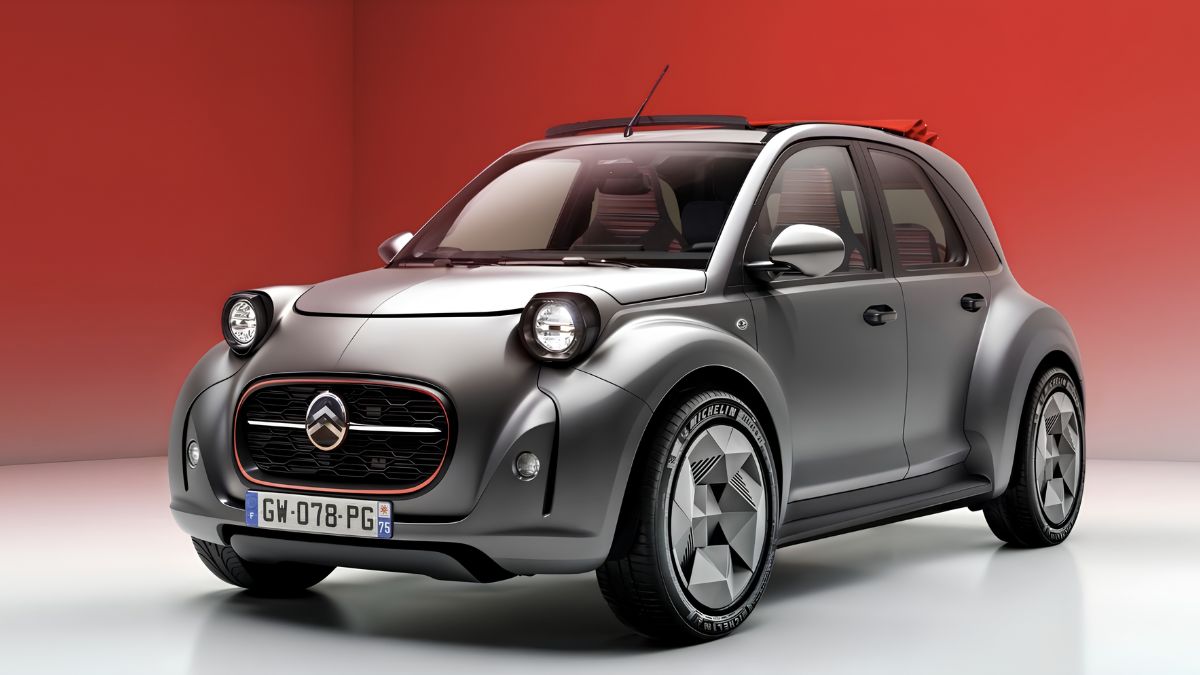
The teaser images show several details that connect the upcoming EV with the original 2CV.
The headlights appear to follow a similar upright arrangement, while the wheel design also takes inspiration from the classic car. Citroen has retained another recognizable feature in the form of a ridged bonnet, giving the concept a visual connection with its predecessor.
These details suggest that Citroen is not simply applying the 2CV name to an unrelated electric vehicle. Instead, the company appears to be using some of the original car’s most recognizable characteristics as part of the new model’s identity.
That approach could help distinguish the EV in an increasingly crowded small-car market. Retro-inspired electric vehicles have already attracted attention from manufacturers looking to combine familiar styling with modern technology.
Electric
The new 2CV is expected to sit at the lower end of Citroen’s future electric vehicle range.
The company has not yet confirmed the battery capacity, motor output or official driving range. However, multiple battery and range options could make sense for an affordable European EV, particularly as customers have different requirements for city driving and longer journeys.
A smaller battery could help keep the purchase price lower, while a larger option could appeal to buyers who regularly travel beyond urban areas.
The final specifications will be important because affordability remains one of the biggest challenges in the European EV market. A car can carry a familiar and appealing design, but its success will ultimately depend on pricing, efficiency and practicality.
Interior
Citroen has also hinted that the new model could feature some unusual design elements inside the cabin.
The original 2CV was known for its simplicity and practical engineering rather than conventional luxury. A modern interpretation could therefore use distinctive controls or flexible interior features to create a similar character.
However, the new car will need to meet contemporary expectations for safety, connectivity and comfort.
The challenge for Citroen will be finding a balance between nostalgia and everyday usability. Too much emphasis on retro styling could make the vehicle feel like a design exercise, while a conventional interior could weaken the connection with the historic nameplate.
Production
The concept is expected to preview a production model planned for 2028.
That gives Citroen time to finalize the technical specifications, manufacturing strategy and positioning within its broader electric vehicle lineup.
The production version is expected to become a base-level EV for the brand in Europe. If Citroen can keep costs under control, the model could target customers who want an electric car without moving into the higher price brackets occupied by larger EVs.
Pricing has not yet been confirmed, so it is too early to determine exactly where the 2CV EV will sit in the European market.
Rivals
The electric 2CV will enter a competitive segment.
Among its potential rivals are the Renault 5 EV, Skoda Epiq and Volkswagen ID. Polo. These models are also aimed at buyers looking for relatively compact electric cars, making price and practicality particularly important.
The Renault 5, in particular, shows how a manufacturer can revive a familiar name and combine it with modern electric technology.
Citroen’s advantage could come from the 2CV’s international recognition. The original model has a long history and remains closely associated with French automotive culture.
Whether that heritage translates into strong demand for a modern EV will depend on more than the badge, however. Range, charging speed, interior space, equipment and pricing will all influence the buying decision.
Debut
More information is expected around the Paris Motor Show, where Citroen will provide a closer look at the concept.
The event should clarify how closely the production model will follow the teaser design and may reveal more about its battery technology and intended market position.
For now, Citroen is keeping much of the technical information under wraps. The confirmed details are limited, but the design teasers clearly show that the company intends to maintain a connection with the original 2CV.
The return of the 2CV name is significant because it combines one of Citroen’s best-known historic badges with the company’s move toward electric vehicles. If the production version arrives as expected in 2028, it could become one of the brand’s most accessible EVs and give Citroen a distinctive competitor in Europe’s growing small-electric-car market.