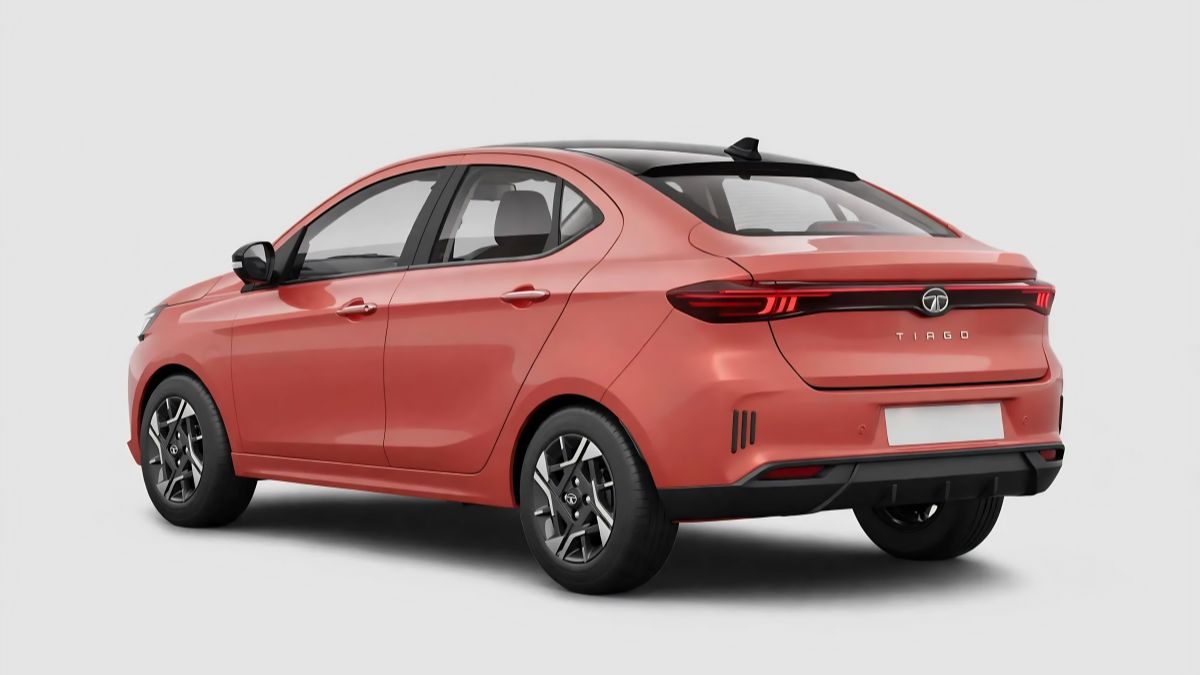
Tata Motors has confirmed that the successor to the Tigor will be called the Tata Aeris. While a new name might seem like a small change, it could be an important part of Tata’s strategy for its next compact sedan.
The Tigor has been on sale since 2017 and has received updates over the years. However, its basic design, platform and positioning have remained familiar. The Aeris is expected to bring more substantial changes, giving Tata an opportunity to introduce the car as a fresh product rather than simply another Tigor facelift.
The timing is also notable. Tata has been working on strengthening its passenger vehicle identity while updating its existing model range with new variants and features. The Aeris could fit into that broader transition.
More importantly, the expected changes suggest that the new name may be accompanied by a meaningful product update.
Aeris
Under the skin, the Tata Aeris is expected to retain powertrain options shared with the Tiago.
These include the 1.2-litre naturally aspirated petrol engine, which produces around 86bhp, along with a CNG version producing approximately 75.5bhp. A five-speed manual gearbox and five-speed AMT are also expected to continue.
Keeping the existing powertrains could allow Tata to build on a familiar mechanical package while focusing its development efforts on the areas where buyers are likely to notice the biggest differences.
The cabin is expected to receive a more substantial update.
A larger touchscreen infotainment system, digital instrument cluster and wireless charging could be among the changes. Tata could also introduce revised upholstery, additional fabric detailing and a more premium dashboard treatment.
Features
The expected feature additions could be particularly important for the Aeris.
Modern buyers increasingly look at technology and convenience features alongside basic specifications. The Aeris could therefore gain equipment such as ventilated front seats, rear air-conditioning vents and a 360-degree camera.
A sunroof has also been reported as a possibility, although it should be treated as unconfirmed until Tata officially announces the equipment list.
If these features make it to the production version, the Aeris would have a more contemporary cabin than the outgoing Tigor.
That could help Tata address one of the challenges facing compact sedans. The segment competes not only with other sedans but also with increasingly feature-rich hatchbacks, SUVs and crossovers.
Design
The exterior design will also determine how successfully Tata can separate the Aeris from the Tigor.
A new name gives Tata greater freedom to establish a distinct visual identity. Rather than presenting the car as an incremental update, the company can market the Aeris as a new generation of its compact sedan offering.
This matters because the Tigor name has been associated with the compact sedan category for several years. A completely new identity can create a clearer distinction between the old model and its successor.
At the same time, retaining familiar mechanical components could help Tata keep development and manufacturing costs under control.
Positioning
The compact sedan market has changed considerably since the Tigor arrived in 2017.
SUVs and crossovers have become increasingly popular, while buyers looking for practical urban cars have more body styles to choose from. A compact sedan therefore needs to offer a clear combination of value, comfort, efficiency and features.
The Aeris could be positioned around those qualities.
The Tigor has traditionally occupied an accessible price point within Tata’s passenger vehicle range. The Aeris could retain that broad positioning while placing greater emphasis on technology and cabin comfort.
That would give Tata an opportunity to make the model feel more contemporary without moving it too far away from its existing customer base.
Identity
The biggest advantage of the Aeris name may ultimately be its ability to create a new starting point.
If Tata had continued with the Tigor name, the car would naturally be compared with every version that came before it. Buyers would focus on how much the facelift had changed and whether the updates justified the transition.
The Aeris allows Tata to frame the product differently.
A new badge can signal a change in design, equipment and overall positioning. It also gives the company more room to establish a new identity for its compact sedan rather than relying entirely on the recognition built by the Tigor.
That does not automatically make the Aeris a better product. Its success will ultimately depend on pricing, features, driving experience, efficiency, safety and how well the finished car meets customer expectations.
Outlook
The Tata Aeris could represent more than a straightforward replacement for the Tigor. By combining familiar powertrain options with a potentially more modern cabin, additional technology and a new identity, Tata appears to be preparing a broader update to its compact sedan offering.
The new name also arrives at a time when Tata is evolving the identity of its passenger vehicle business. That makes the Aeris an interesting model to watch as the company looks to keep its sedan portfolio relevant in a market increasingly dominated by SUVs and crossovers.
For buyers who still prefer the proportions, boot space and driving characteristics of a sedan, the Aeris could offer a more contemporary alternative while retaining some of the mechanical familiarity associated with Tata’s existing products. Its final specifications, pricing and equipment will determine how significant the change is when the production model arrives.