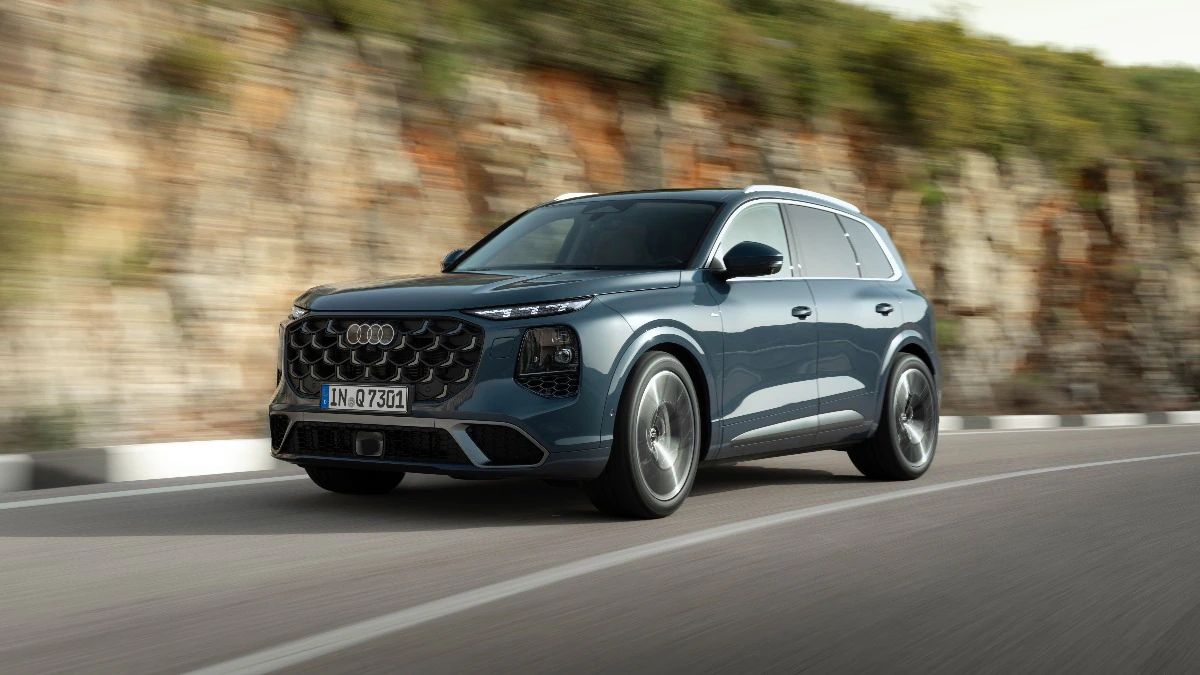
The third-generation Audi Q7 has been introduced globally, bringing a series of technical and structural updates that go beyond a typical model refresh. While the exterior changes remain evolutionary, the underlying shift is more significant.
The SUV now sits on a new combustion-focused platform and incorporates updated engine and software systems. In practical terms, the model reflects how Audi is managing its transition period between internal combustion development and increasing electrification across its lineup.
The latest Q7 continues to serve as Audi’s full-size luxury SUV, positioned for customers who still prefer conventional engines combined with modern digital features. Rather than redefining the segment, Audi has focused on refining the existing formula.
The vehicle integrates updated electronics, improved driver assistance systems, and revised powertrain options. It also acts as a reference point for how Audi intends to develop its combustion-engine vehicles in the coming years, especially as electric models expand in parallel.
Heritage
The Q7 was first introduced in 2005 as Audi’s entry into the large SUV category. It marked a shift in the brand’s portfolio, which had previously been centered on sedans and performance cars. Over time, the Q7 contributed to the expansion of Audi’s SUV range, influencing models positioned both above and below it.
Two decades later, the model continues to hold a stable position in the lineup. It is not positioned as a flagship in the traditional sense, but it remains a consistent volume and brand-defining product within Audi’s global SUV strategy.
Platform
A key development in this generation is the introduction of the Premium Platform Combustion (PPC) architecture. This platform is designed specifically for vehicles that continue to use internal combustion engines while incorporating modern electronic systems.
The PPC architecture focuses on modularity, improved efficiency, and software integration. It is expected to underpin multiple future Audi models, making the Q7 one of the first applications of this structural direction.
| Feature | Previous Architecture | PPC Architecture |
|---|---|---|
| Efficiency | Standard combustion setup | Optimized thermal management |
| Software integration | Limited digital layering | Centralized vehicle software system |
| Driving systems | Conventional calibration | Adaptive dynamic control systems |
| Scalability | Model-specific adaptation | Multi-model flexible design |
This transition indicates that Audi is continuing to invest in combustion platforms while aligning them more closely with digital vehicle systems used in electric models.
Engine
The new Q7 continues to offer combustion engines, including updated V6 and V8 units depending on the market. These engines are supported by mild-hybrid systems that assist with efficiency and low-speed operation.
The focus is not on increasing peak performance but on improving consistency, emissions control, and everyday drivability. This approach reflects regulatory pressures and shifting consumer expectations in the luxury SUV segment.
By retaining combustion options, Audi is maintaining flexibility for markets where electrification adoption varies significantly.
Strategy
The large luxury SUV segment remains a core revenue area for premium manufacturers. The Q7 competes directly with models such as the BMW X7, Mercedes-Benz GLS, and Volvo XC90.
Each competitor follows a distinct positioning approach:
| Model | Primary Focus | Market Positioning |
|---|---|---|
| Audi Q7 | Balanced technology and comfort | Versatile premium SUV |
| BMW X7 | Driving performance | Driver-focused luxury SUV |
| Mercedes GLS | Interior space and comfort | High-comfort full-size SUV |
| Volvo XC90 | Safety systems | Safety-oriented premium SUV |
Within this group, the Q7 functions as a balanced option that combines multiple attributes rather than emphasizing a single defining characteristic. This positioning remains central to Audi’s strategy in this segment.
Technology
The Q7 introduces updated digital and hardware systems that align with Audi’s broader product direction. Inside the cabin, a curved digital display setup is used alongside an additional passenger screen, reflecting a shift toward multi-display interfaces.
Lighting systems have also been revised. The SUV features Digital Matrix LED headlights and OLED-based rear lighting elements. These systems support adaptive lighting functions and configurable visual signatures.
Other features include adaptive air suspension, rear-axle steering, updated driver assistance systems, and an upgraded premium audio system supplied by Bang & Olufsen. Together, these systems are intended to improve usability rather than fundamentally change the driving experience.
Several of these technologies are expected to appear in future Audi models across different segments.
Positioning
The introduction of the third-generation Q7 occurs at a time when the automotive industry is transitioning toward electrification, but without uniform adoption across all regions. Audi’s approach reflects this imbalance by continuing development of combustion platforms while expanding electric vehicle offerings.
The Q7 therefore occupies a transitional role within the lineup. It supports current market demand while allowing Audi to extend the lifecycle of combustion technology under updated efficiency and regulatory frameworks.
It also maintains Audi’s presence in a segment where long-term customer demand for large internal combustion SUVs remains steady in several global markets.
The third-generation Audi Q7 represents a structured update rather than a redesign of its core identity. It introduces a new combustion platform, updated engine technologies, and revised digital systems, while retaining its established positioning in the full-size SUV category.
In the context of Audi’s broader product strategy, the model functions as a link between existing combustion architecture and future electric development, ensuring continuity across both directions of the brand’s portfolio.
FAQs
What is new in the Audi Q7 third generation?
It introduces a new platform, updated engines, and revised digital systems.
What is the PPC platform?
It is Audi’s architecture designed for modern combustion-engine vehicles.
Does the Q7 still use combustion engines?
Yes, it continues with V6 and V8 engines supported by mild-hybrid systems.
Who are its main competitors?
BMW X7, Mercedes-Benz GLS, and Volvo XC90.
Is the Q7 part of Audi’s electric lineup?
No, it remains a combustion SUV but shares technology direction with EVs.