
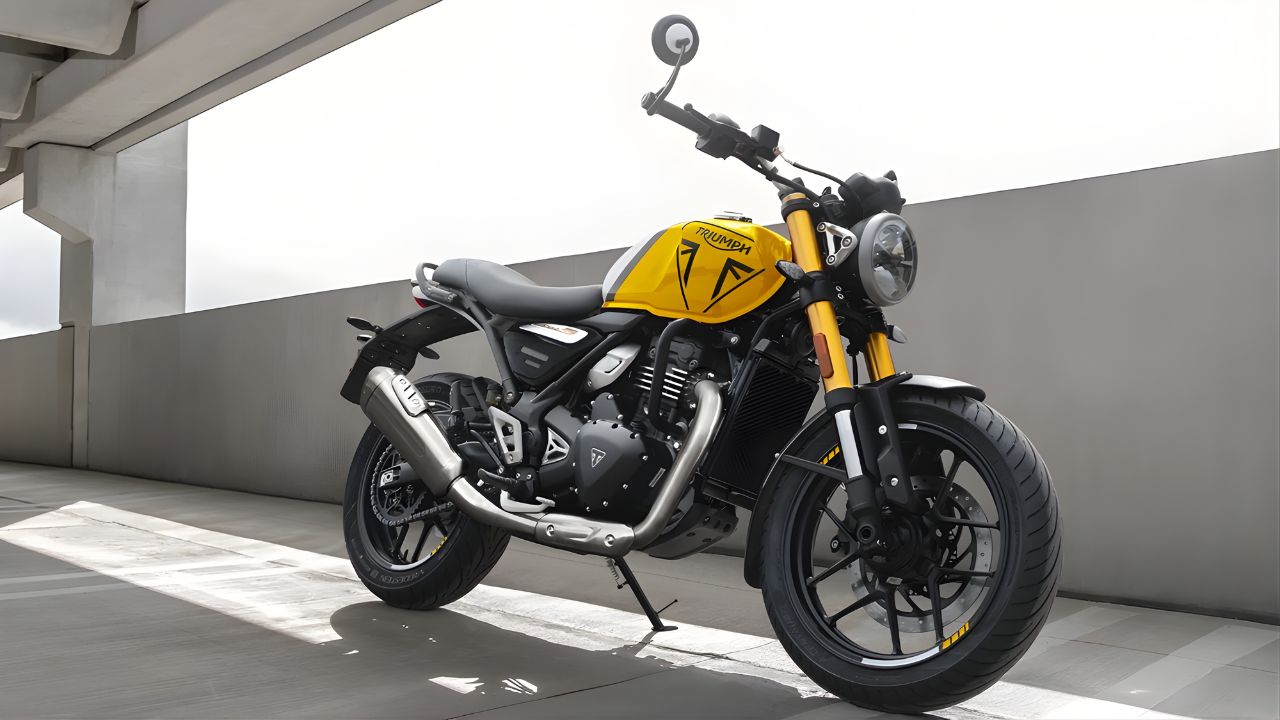
Triumph is preparing for a calculated shift in India. After successfully launching the Speed 400 and Scrambler 400X through its partnership with Bajaj Auto, the British brand is now gearing up to introduce an all-new 350cc motorcycle range in April 2026.
At first glance, reducing engine capacity may seem like a step backward. But in reality, it’s a smart financial and market-driven move designed specifically for India’s price-sensitive premium buyers.
The new 350cc lineup will sit below Triumph’s existing 400cc models and create a fresh entry point into the brand. More importantly, it directly addresses a crucial factor influencing motorcycle pricing today—taxation.
Strategy
Triumph’s current made-in-India portfolio revolves around a 399cc single-cylinder engine platform. This engine powers models like the Speed 400 and Scrambler 400X, offering a strong blend of performance and modern-retro styling.
However, there’s a catch. Under the revised GST 2.0 regime, motorcycles above 350cc fall into a steep 40% tax slab. That places them in a category often associated with luxury products. For entry-level premium bikes, that’s a serious pricing disadvantage.
By downsizing to around 350cc, Triumph and Bajaj can shift the new motorcycles into the 18% GST bracket. That’s a massive tax difference and opens up room for sharper pricing.
Think of it like trimming unnecessary weight before a race—it makes the machine leaner and more competitive without losing its core strength.
Taxation
Let’s break down how the tax structure impacts pricing.
| Engine Capacity | GST Rate | Pricing Impact |
|---|---|---|
| Up to 350cc | 18% | Lower ex-showroom cost |
| Above 350cc | 40% | Significantly higher price |
A jump from 18% to 40% is not minor—it more than doubles the tax burden. For buyers, this translates into higher EMIs, insurance premiums, and overall ownership costs.
By introducing a 350cc range, Triumph avoids this tax penalty and makes its motorcycles more accessible without compromising brand positioning.
Market
The 350cc–500cc segment in India is aspirational but relatively small compared to commuter categories. With higher taxes pushing up prices, demand risks shrinking further.
Indian buyers today are practical. They want style and performance, but affordability remains key. A Triumph badge carries prestige, but the final on-road price often determines the purchase decision.
That’s where the 350cc models could shine. They promise to offer nearly the same riding experience as the 400cc bikes while keeping ownership costs in check.
Instead of competing in a tax-heavy bracket, Triumph is stepping into a sweet spot where aspiration meets affordability.
Platform
The upcoming 350cc engine is expected to be derived from the existing 399cc unit. Engineers will likely modify the bore or stroke and recalibrate the engine to deliver strong low and mid-range torque.
Why focus on mid-range performance?
Most Indian riding conditions involve city traffic and short highway bursts. Riders rarely push to top speeds daily. What matters more is usable torque, smooth throttle response, and fuel efficiency.
Here’s a quick comparison:
| Feature | 399cc Models | Upcoming 350cc Models |
|---|---|---|
| Engine Base | Single-cylinder | Derived single-cylinder |
| Tax Slab | 40% GST | 18% GST |
| Target Audience | India & Exports | Primarily India |
| Focus | Performance balance | Cost-effective usability |
Export markets are likely to continue receiving the 398-399cc versions, while the 350cc bikes will focus mainly on domestic buyers.
Pricing
Lower taxation gives Triumph and Bajaj valuable pricing flexibility. Even a modest reduction in ex-showroom price can significantly improve affordability in the premium segment.
Potential advantages include:
- More competitive ex-showroom pricing
- Lower EMI options
- Reduced insurance premiums
- Improved resale value
For many buyers cross-shopping between Royal Enfield 350cc models and Triumph’s offerings, pricing could be the deciding factor.
Owning a Triumph at a cost closer to mainstream 350cc motorcycles would be a compelling proposition.
Competition
The 350cc category in India is dominated by Royal Enfield, Honda, and Jawa. Triumph’s entry into this space signals direct competition with established players.
But Triumph brings something unique to the table—a globally recognized brand paired with Bajaj’s cost-efficient manufacturing expertise. This combination allows premium styling and engineering at competitive pricing.
Instead of being squeezed in a high-tax 400cc bracket, Triumph is positioning itself right where volumes are stronger, and growth potential remains steady.
Impact
This strategic shift is not merely about reducing engine size. It’s about long-term sustainability in a rapidly evolving market.
For Triumph, it means:
- Expanded customer base
- Better price competitiveness
- Higher domestic sales volumes
For Bajaj Auto, it strengthens its premium motorcycle portfolio and leverages local production advantages.
For customers, the shift promises Triumph ownership at a more accessible price, without a drastic compromise in performance or character.
With April 2026 as the expected launch timeline, the upcoming Triumph 350cc Speed and Scrambler models could become crucial volume drivers. In a market where pricing can make or break a product, going slightly smaller might just deliver bigger success.
Ultimately, this move reflects smart business thinking. Triumph isn’t stepping down—it’s stepping strategically into a more favorable segment. If priced correctly, the 350cc range could redefine entry-level premium motorcycles in India and broaden the brand’s reach significantly.
FAQs
When will Triumph launch the 350cc bikes?
Triumph plans to launch them in April 2026.
Why is Triumph shifting to 350cc?
To benefit from the lower 18% GST taxation.
Will 400cc bikes be discontinued?
No, they will continue alongside 350cc.
Which models may get 350cc engines?
Likely Speed and Scrambler variants.

Is performance expected to reduce?
Focus will be on mid-range usability.