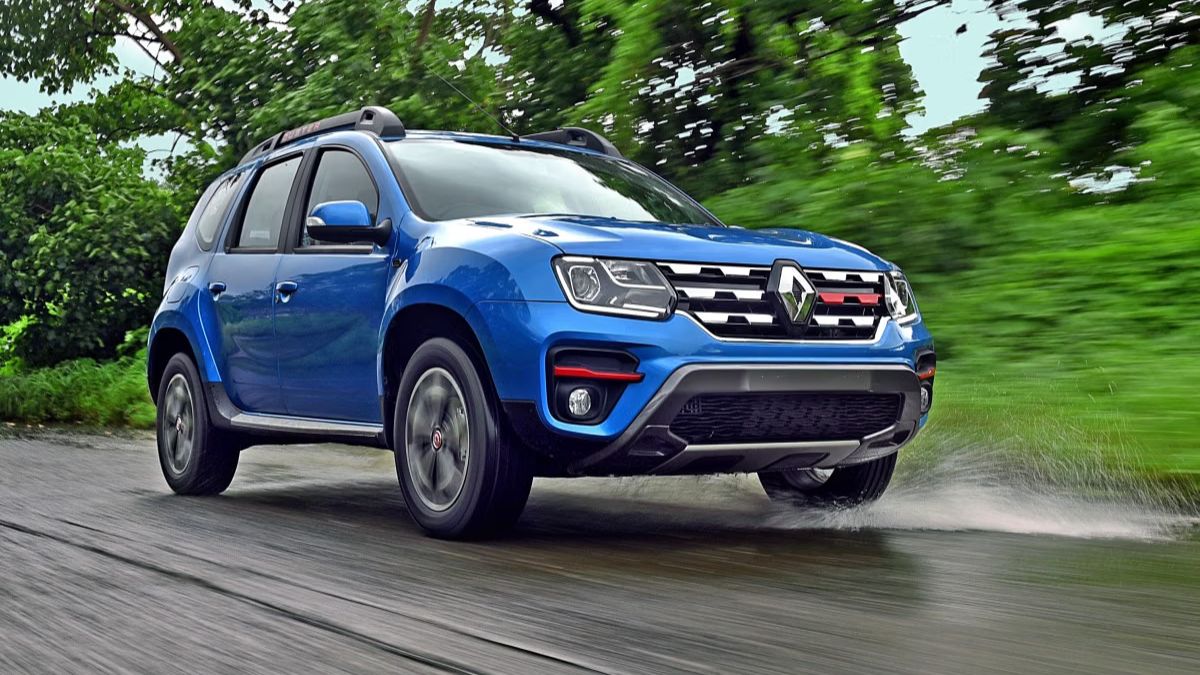
The Renault Duster has made a return to the Indian market with updated styling, new features, and multiple powertrain options. Among the available variants, the 1.3-litre turbo-petrol manual has drawn attention for its performance-focused setup. Renault claims a fuel efficiency figure of 17.75kmpl for this version, but recent real-world testing paints a more detailed picture of how the SUV performs in daily driving conditions.
The new-generation Duster was introduced in India earlier this year with prices starting at Rs. 10.49 lakh (ex-showroom). Renault currently offers the SUV with two engine choices, while a hybrid version is expected to arrive closer to the festive season. The 1.3-litre turbo-petrol variant sits at the top of the lineup and targets buyers looking for stronger performance along with SUV practicality.
Engine
The Renault Duster 1.3 Turbo Manual is powered by a 1.3-litre turbocharged petrol engine producing 160bhp and 280Nm of torque. The engine is paired with a six-speed manual gearbox, while buyers can also opt for a six-speed DCT automatic transmission with the same motor.
In addition to this setup, Renault also offers a smaller 1.0-litre turbo-petrol engine that develops 99bhp and 166Nm. This version is available only with a six-speed manual transmission.
Here is a quick comparison of the available engine options:
| Engine | Power | Torque | Transmission |
|---|---|---|---|
| 1.0-litre Turbo Petrol | 99bhp | 166Nm | 6-speed Manual |
| 1.3-litre Turbo Petrol | 160bhp | 280Nm | 6-speed Manual/DCT |
The larger turbocharged engine gives the Duster stronger acceleration and improved highway performance compared to the smaller motor.
Mileage
Fuel efficiency remains one of the most important factors for SUV buyers in India, especially in the midsize segment. During independent real-world tests, the Duster 1.3 Turbo Manual delivered figures that differed notably from the company-claimed mileage.
In city driving conditions, the SUV returned 9.58kmpl. On highways, where traffic movement remained smoother and speeds were more consistent, the figure increased to 18.53kmpl.
The combined fuel efficiency worked out to 11.81kmpl. While highway mileage came close to the claimed number, overall efficiency remained significantly lower than the official 17.75kmpl figure.
| Driving Condition | Mileage |
|---|---|
| City | 9.58kmpl |
| Highway | 18.53kmpl |
| Overall | 11.81kmpl |
| Claimed | 17.75kmpl |
The MID, or multi-information display, showed readings close to the actual test figures. It displayed 11.1kmpl during city driving and 19.2kmpl on highways.
These results suggest that the Duster performs efficiently during long-distance highway journeys but consumes more fuel in heavy traffic conditions.
Performance
The 1.3-litre turbo-petrol engine remains one of the strongest aspects of the new Duster. With 160bhp on offer, the SUV delivers quick acceleration and strong mid-range performance.
The 280Nm torque output allows smoother overtakes and relaxed cruising at highway speeds. The six-speed manual gearbox complements the engine well and provides precise gear shifts.
Drivers looking for responsive performance may appreciate this setup, particularly on open roads. However, turbo-petrol engines typically consume more fuel in stop-and-go traffic, which is reflected in the lower city mileage figures.
Weight
The tested top-spec Iconic variant weighs 1,380kg. Vehicle weight plays a direct role in fuel consumption, especially during urban driving where repeated acceleration and braking are common.
While the additional weight affects city efficiency, it also contributes to better highway stability and ride comfort. On longer journeys, the Duster feels planted at higher speeds, which can improve driving confidence.
Testing
The mileage test followed a controlled procedure designed to simulate regular driving conditions. Standard settings were maintained throughout the process to ensure consistency.
The air conditioning temperature was kept between 22 and 23 degrees Celsius, while blower speed was fixed at level four. Seat ventilation remained active at level three during testing.
Other systems, including the infotainment unit, were also used normally, similar to everyday usage by owners. Such conditions help provide a more realistic estimate of fuel efficiency compared to laboratory figures.
Features
The new-generation Renault Duster includes several modern comfort and convenience features. Depending on the variant, buyers can expect:
- Large touchscreen infotainment system
- Automatic climate control
- Ventilated front seats
- Connected car technology
- Multiple drive modes
- Premium cabin materials
- Advanced safety features
These additions improve overall comfort and usability, though features like ventilation and climate control can also have a minor effect on fuel consumption.
Rivals
The Renault Duster competes in the midsize SUV segment, where several established models are already available. Key rivals include:
| Rival | Segment |
|---|---|
| Hyundai Creta | Mid-size SUV |
| Kia Seltos | Mid-size SUV |
| Maruti Grand Vitara | Hybrid SUV |
| Toyota Hyryder | Hybrid SUV |
| Volkswagen Taigun | Turbo Petrol SUV |
Compared to hybrid competitors such as the Grand Vitara and Hyryder, the Duster focuses more on performance than outright efficiency. Buyers prioritising fuel savings may lean toward hybrid alternatives, while those looking for stronger turbo-petrol performance may consider the Duster a suitable option.
Market
Renault’s decision to reintroduce the Duster comes at a time when the midsize SUV segment continues to grow rapidly in India. The SUV carries strong brand recall due to the popularity of the earlier-generation model.
With updated styling, more features, and multiple engine options, Renault appears to be positioning the new Duster as a balance between practicality and driving performance.
The upcoming hybrid version could also help the model appeal to buyers seeking improved fuel efficiency in urban conditions.
Verdict
The Renault Duster 1.3 Turbo Manual delivers strong highway performance and respectable long-distance efficiency, but city fuel economy remains lower than the claimed figure. The SUV offers a powerful turbo-petrol engine, practical features, and stable highway manners, making it suitable for buyers who value driving performance. However, those primarily focused on fuel efficiency may find hybrid SUVs more economical for daily urban use.
FAQs
What is the Duster 1.3 MT mileage?
It returned 11.81kmpl overall.
How much power does the engine make?
The engine produces 160bhp.
What is the highway mileage figure?
It delivered 18.53kmpl on highways.
Does the Duster get automatic transmission?
Yes, a six-speed DCT is offered.
Is a hybrid Duster coming soon?
Yes, it is expected later this year.