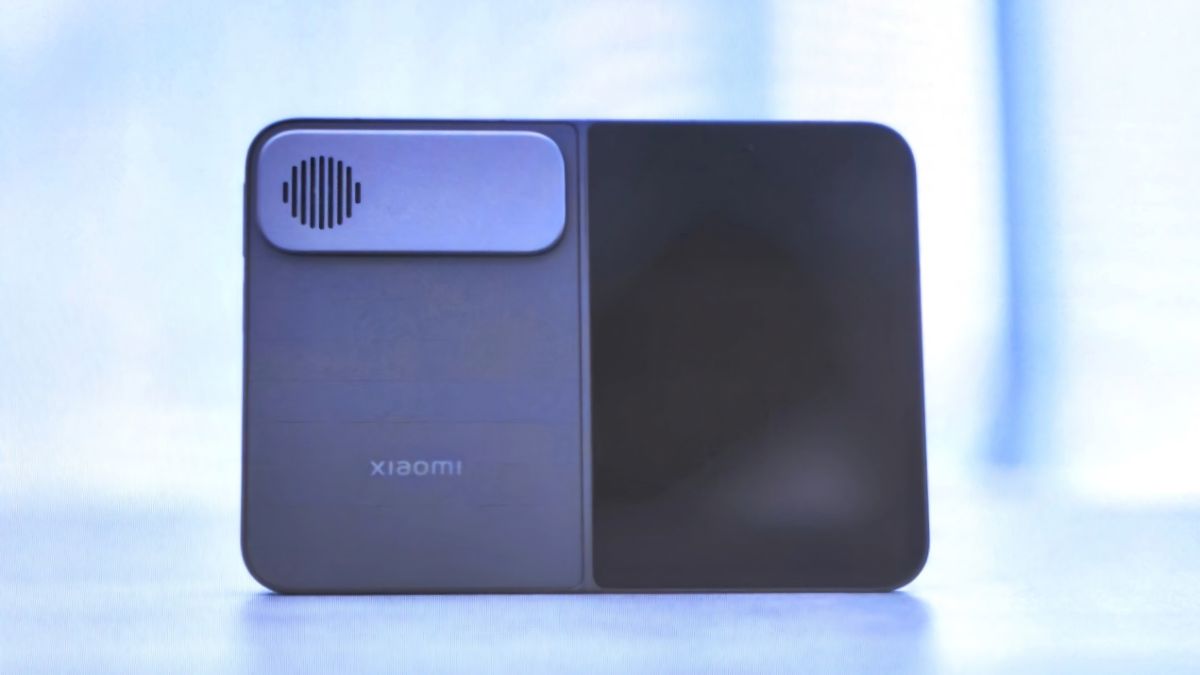
Xiaomi has confirmed that two of its upcoming flagship devices will launch in China in September, bringing the company’s latest proprietary silicon to its next generation of hardware. The Xiaomi 18 Fold and Xiaomi Pad 9 Pro Max will both use the new Xring 03 chipset.
The exact launch date has not yet been announced, but Xiaomi has confirmed that the book-style foldable will be the first device to feature the new SoC. The flagship tablet will use the same platform, alongside additional chips designed to handle AI and other workloads.
Launch
Xiaomi announced on Weibo that the Xiaomi 18 Fold will arrive in China in September. The device is expected to be the company’s next-generation book-style foldable and will debut with the Xring 03 chipset.
The Xiaomi Pad 9 Pro Max will launch alongside the foldable and will also be powered by the Xring 03. Xiaomi has not yet revealed the specific date for either product, so further details are expected closer to the launch.
The two devices will give Xiaomi an opportunity to showcase its latest in-house chip across different product categories. The 18 Fold will use it in a foldable smartphone, while the Pad 9 Pro Max will bring the platform to a large-screen tablet.
Chipset
The Xring 03 is built using a 3nm manufacturing process and reportedly contains 24 billion transistors across a 133-square-millimeter chip area.
Xiaomi says the processor uses a 10-core CPU configuration consisting of six efficiency cores and four performance cores. The chip can reach a peak clock speed of 4.35GHz.
The company has also shared benchmark results for the processor. Xiaomi claims the Xring 03 scored more than 5.22 million points on AnTuTu.
In CPU testing, Xiaomi reports a single-core score of 3,945 points and a multi-core score of 15,221 points. Benchmark results can vary depending on testing conditions and software, so real-world performance will depend on the final devices and their thermal management.
Graphics
The Xring 03 also includes a 16-core G2 Ultra NX GPU.
According to Xiaomi, the GPU offers an 85% improvement in peak performance and a 182% increase in ray-tracing performance compared with the previous generation. The company also claims that it can deliver these improvements while using 64% less power.
The chip is expected to support LPDDR6 memory, giving future Xiaomi devices access to newer memory technology alongside the company’s latest processor architecture.
Graphics performance will be particularly relevant for the Xiaomi 18 Fold, where a powerful GPU could support demanding games and other intensive applications. On the Pad 9 Pro Max, the additional graphics capability could benefit productivity, creative applications and high-resolution media.
AI
Xiaomi is not relying on the Xring 03 alone for its new AI capabilities. The company has described the platform as a three-chip solution comprising the Xring 03 SoC, Xring O100 AI acceleration chip and Xring D100 AI chip.
The dedicated AI hardware is designed to provide additional processing capacity for artificial intelligence workloads. Xiaomi claims the new NPU can deliver up to 200 TOPS of AI performance.
The company also lists 3.13 teraFLOPS of performance for the AI hardware. The combination is intended to provide more processing resources for AI features across supported devices.
The practical impact will depend on how Xiaomi integrates the hardware into its software and applications. Hardware specifications alone do not determine how useful AI features will be for consumers.
Devices
The Xiaomi 18 Fold is the more significant of the two launches from a form-factor perspective. As a book-style foldable, it will compete in a segment where manufacturers are focusing on larger displays, thinner designs and improved multitasking.
The Pad 9 Pro Max, meanwhile, is positioned as a flagship tablet. Using the same Xring 03 platform could give it substantial processing and graphics capabilities, particularly for users who need a device for demanding applications.
Both products will initially be announced for China. Xiaomi has not yet provided details about international availability, pricing or the full specifications of either device.
The September launch will therefore provide the first opportunity to see how the Xring 03 performs in commercially available hardware. The combination of a 3nm process, 10-core CPU, G2 Ultra NX GPU and dedicated AI hardware represents a significant step in Xiaomi’s proprietary chipset strategy.
For now, the key details confirmed by Xiaomi are the September launch window, the use of Xring 03 in both devices and the accompanying Xring O100 and Xring D100 AI chips. More information about pricing, design, display specifications, cameras, battery capacity and availability is expected when the company announces the products in full.