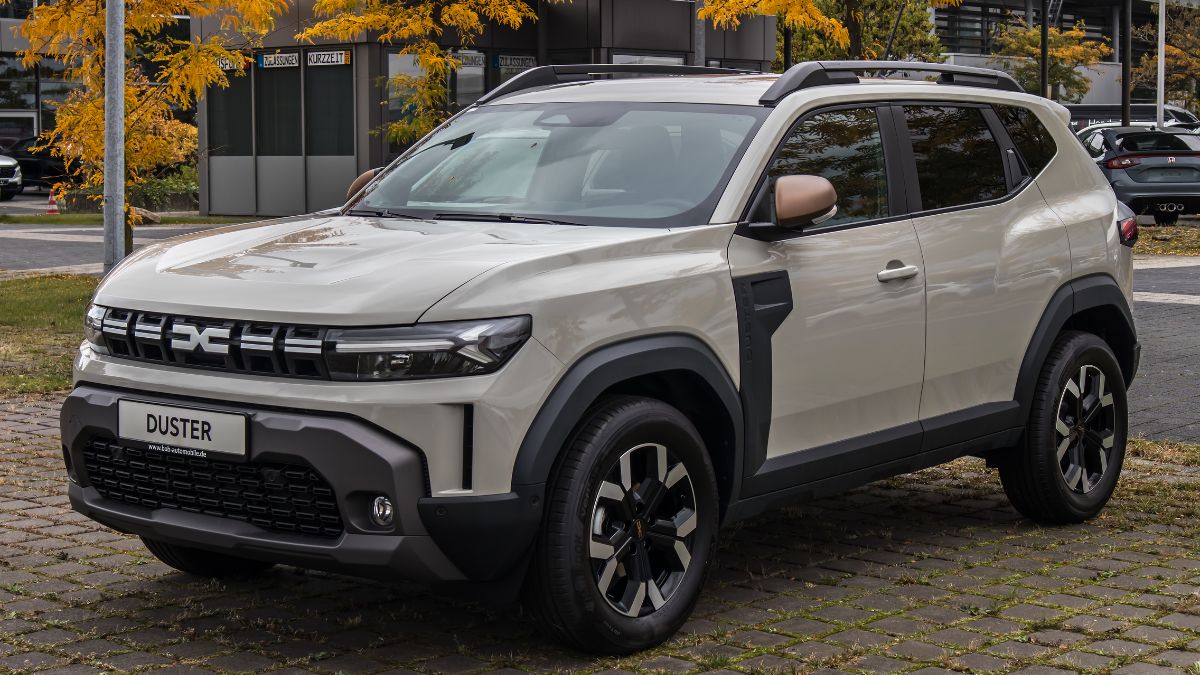
When Renault reintroduced the Duster in India earlier this year, expectations were high. The SUV returned in March with an introductory starting price of Rs. 10.49 lakh (ex-showroom), updated styling, and a longer list of features aimed squarely at the competitive mid-size SUV segment. Initial demand appeared strong, supported by the start of deliveries in mid-April for the 1.0-litre and 1.3-litre turbo petrol variants.
However, May 2026 sales data suggests that the initial momentum has slowed more quickly than Renault may have anticipated. With sales falling by more than 40 per cent month-on-month, the Duster’s early performance is now being closely watched.
Numbers
In April 2026, the Renault Duster recorded sales of 2,359 units. By May, that figure had declined to 1,267 units. This represents a drop of just over 40 per cent in only the second full month of sales following the launch.
Such a pattern is not uncommon in the automotive market. New launches often see a surge driven by pent-up demand, advance bookings, and early adopters. Once this initial wave is fulfilled, volumes typically normalize. However, the scale of the decline suggests that interest may have cooled faster than expected, particularly for a model positioned as Renault’s flagship offering in India.
Context
The Duster plays a central role in Renault India’s portfolio. As one of the brand’s most recognisable nameplates, its performance has a significant influence on overall sales.
This was evident in Renault’s broader numbers for May. The company reported total sales of 4,113 units during the month, down from 5,413 units in April, marking a decline of about 24 per cent. The Duster’s drop accounted for a substantial share of this overall reduction, underlining how dependent Renault currently is on the SUV for volumes.
Launch
The latest-generation Duster was launched with two turbo-petrol engine options. The 1.0-litre unit caters to buyers focused on affordability, while the more powerful 1.3-litre turbo petrol targets customers looking for stronger performance.
At launch, the Duster received positive attention for its feature list, which is competitive by segment standards. Renault positioned the SUV as a tech-forward offering, aiming to appeal to urban buyers as well as those upgrading from smaller vehicles.
Features
One area where the Duster continues to stand out is equipment. The SUV is offered with a 10-inch infotainment system with Google Built-in, a fully digital instrument cluster, cooled front seats, automatic climate control, and a panoramic sunroof. Safety and convenience features include LED headlamps, a 360-degree camera, and Level 2 advanced driver assistance systems.
On paper, this puts the Duster in line with, or ahead of, several rivals in the mid-size SUV category. Yet, features alone may not be enough to sustain demand in a segment where buyers are increasingly sensitive to fuel efficiency, long-term ownership costs, and brand perception.
Market
Competition in the mid-size SUV space has intensified over the past few years. Buyers today have a wide range of options, many of which offer multiple powertrain choices, including strong hybrid and mild hybrid setups. In comparison, the Duster’s current petrol-only lineup may be limiting its appeal for some customers.
This is particularly relevant in a market where rising fuel costs have pushed efficiency higher up the priority list. While turbo petrol engines deliver performance, they are often perceived as less economical than hybrid alternatives in everyday use.
Hybrid
Renault is expected to address this gap later this year. The Duster is slated to receive a hybrid powertrain by November 2026. This version could prove to be a turning point for the model, especially among buyers who have delayed their purchase in anticipation of a more efficient option.
A hybrid Duster would allow Renault to broaden its customer base and better align with current market trends. It could also help stabilise monthly sales by adding a new talking point and renewing interest several months after the initial launch.
Outlook
For now, the early sales slowdown does not necessarily signal long-term trouble. Many models experience fluctuations in their first few months as supply, pricing, and market awareness settle into a more predictable rhythm.
That said, Renault will be closely monitoring how the Duster performs in the coming months. Sustaining momentum in this segment requires more than a strong launch. Consistent demand, competitive positioning, and timely updates all play a role.
The arrival of the hybrid variant will likely be crucial in shaping the Duster’s trajectory through the rest of 2026. Whether it can reverse the recent dip and establish the SUV as a steady volume driver remains an open question, but one that will be answered soon enough.
FAQs
How much did Renault Duster sales fall in May 2026?
Sales declined by over 40 per cent month-on-month.
How many units did the Duster sell in May?
Renault sold 1,267 units in May 2026.
What engines are currently available?
1.0-litre and 1.3-litre turbo petrol engines.
When is the Duster hybrid expected?
The hybrid version is expected by November 2026.

What is the Duster’s starting price in India?
It starts at Rs. 10.49 lakh, ex-showroom.