Apple Pay has finally entered India, giving iPhone users a new way to make contactless card payments. The launch brings Apple’s familiar tap-to-pay experience to the country, but its initial limitations raise a bigger question: has Apple arrived too late in a market where UPI has already become the default digital payment method?
The service is also launching with a relatively narrow card and bank base. That means Apple Pay has an opportunity among India’s growing credit card users, but it still faces a payment ecosystem built around UPI, PhonePe and Google Pay.
Launch
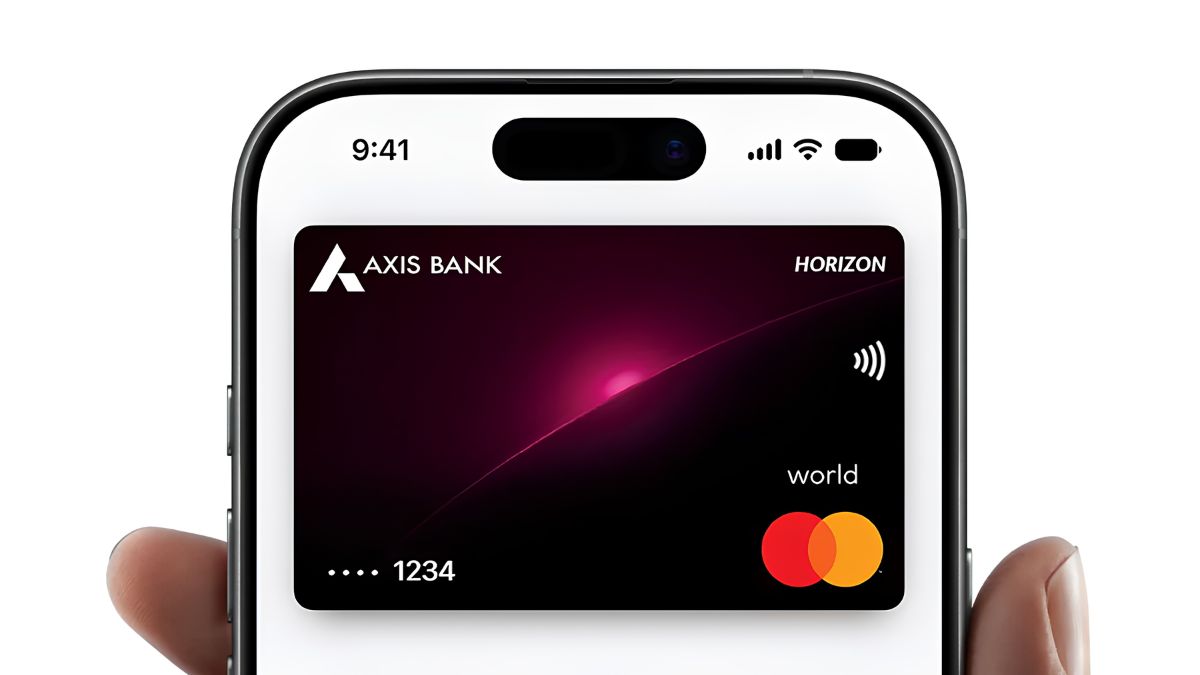
Apple Pay lets users add eligible cards to Apple Wallet and authenticate payments using Face ID, Touch ID or a device passcode. At compatible stores, customers can then tap an iPhone or Apple Watch at a contactless terminal.
The service can also simplify online payments by allowing users to complete transactions without repeatedly entering card information.
However, India’s launch is more limited than Apple’s offering in markets such as the US. At launch, eligible Axis Bank Visa and Mastercard credit cards are supported, while RuPay cards and cards issued by other banks are not included.
That restriction is important because the size of Apple’s addressable market depends not only on iPhone ownership but also on whether users hold a supported card.
Timing
Apple’s India entry comes after years of growth in digital payments and contactless transactions. Counterpoint Research’s Tarun Pathak described the launch as late from both a global and competitive perspective, while pointing to regulatory requirements and India’s relatively smaller installed base of iPhones as possible factors behind the timing.
Apple’s approach remains consistent with its broader payment architecture. NFC card tokenisation, device-level security and authentication through Face ID, Touch ID and Apple Watch form the foundation of the experience.
The result is a payment system designed around Apple’s hardware rather than a standalone payments network. That can be an advantage for users already invested in the Apple ecosystem, but it also means Apple needs broader partnerships to make the service relevant to more customers.
UPI
The biggest challenge may not be another wallet. It is UPI.
According to the Reserve Bank of India’s December 2025 Payment System Report, UPI represented 85.5% of digital transaction volume. That gives Apple Pay a difficult starting point because Indian consumers already have a widely accepted method for transferring money directly from their bank accounts.
Apps such as PhonePe and Google Pay have become part of everyday payment habits, from small retail purchases to bill payments and peer-to-peer transfers.
Apple Pay’s initial Indian offering does not include UPI integration. Its primary use case is therefore contactless card payment for customers with supported Apple devices and eligible credit cards.
This makes the service different from the payment apps that many Indians already use. Apple is not replacing UPI with another broad digital payment platform. Instead, it is making card payments easier within its own ecosystem.
Cards
Credit cards could provide Apple Pay with its clearest opportunity.
RBI data shows that credit card spending has expanded significantly. Credit card spending reached about ₹23.2 lakh crore in calendar year 2025, compared with ₹8.9 lakh crore in 2021. Private banks accounted for 71.1% of outstanding credit cards.
Debit cards, meanwhile, have faced declining usage as UPI has taken a larger share of everyday payments.
This creates an interesting opening for Apple. UPI may dominate routine transactions, but credit cards remain relevant for rewards, credit access and higher-value purchases. Apple Pay could make those transactions more convenient by putting the card inside an iPhone or Apple Watch.
| Payment trend | Recent picture |
|---|---|
| UPI share of digital volume | 85.5% |
| Credit card spending in 2025 | ₹23.2 lakh crore |
| Credit card spending in 2021 | ₹8.9 lakh crore |
| Private bank share of outstanding cards | 71.1% |
Still, rising credit card spending does not automatically mean consumers will choose Apple Pay. People tend to stick with payment methods that are already familiar and widely accepted.
Competition
Apple is also entering a market where NFC payments are not new.
Samsung Wallet already provides NFC-based payments on compatible Galaxy devices, while Android users have access to several established payment options. The difference is that Apple Pay is tightly integrated with Apple’s hardware and software, making the experience particularly attractive to customers who already use an iPhone and Apple Watch.
The initial bank restriction, however, could slow adoption. An iPhone owner may be interested in Apple Pay but still be unable to use it if their card is issued by an unsupported bank.
For Apple, expanding bank partnerships could therefore be more important in the short term than convincing consumers that contactless payments are useful.
Outlook
Apple Pay’s India launch is unlikely to overturn the country’s payment landscape overnight. Its initial role is more likely to be complementary, giving eligible iPhone users another way to use credit cards at contactless terminals.
The bigger question is whether Apple expands support beyond Axis Bank and adds more cards and payment options. A wider bank network would make the service considerably more useful, while UPI integration would put it closer to the payment habits of the broader Indian market.
For now, Apple Pay enters India with a clear strength – a polished and secure contactless experience – but also a narrow starting point. In a country where UPI already handles most digital payment activity, Apple’s challenge is not simply introducing tap-to-pay. It is convincing consumers that they need another way to pay.